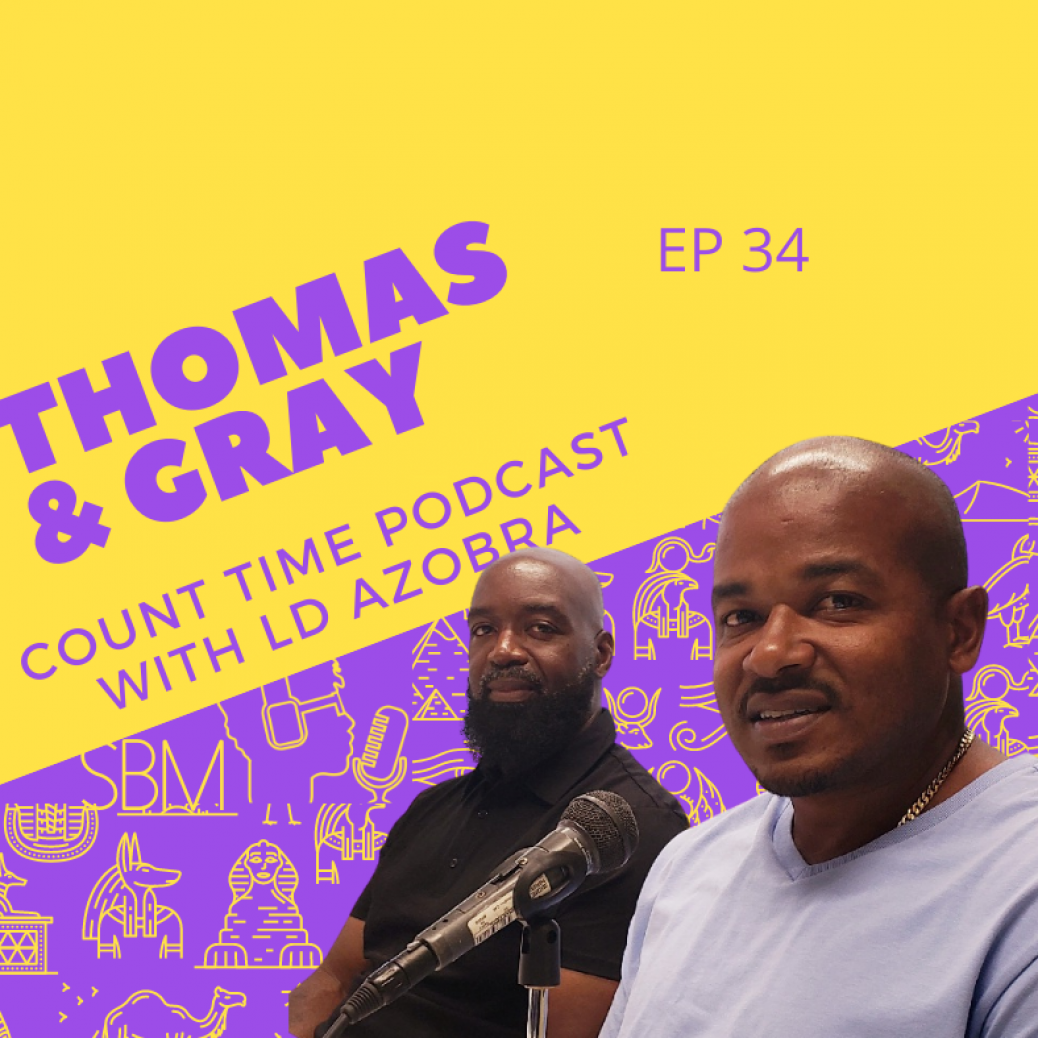
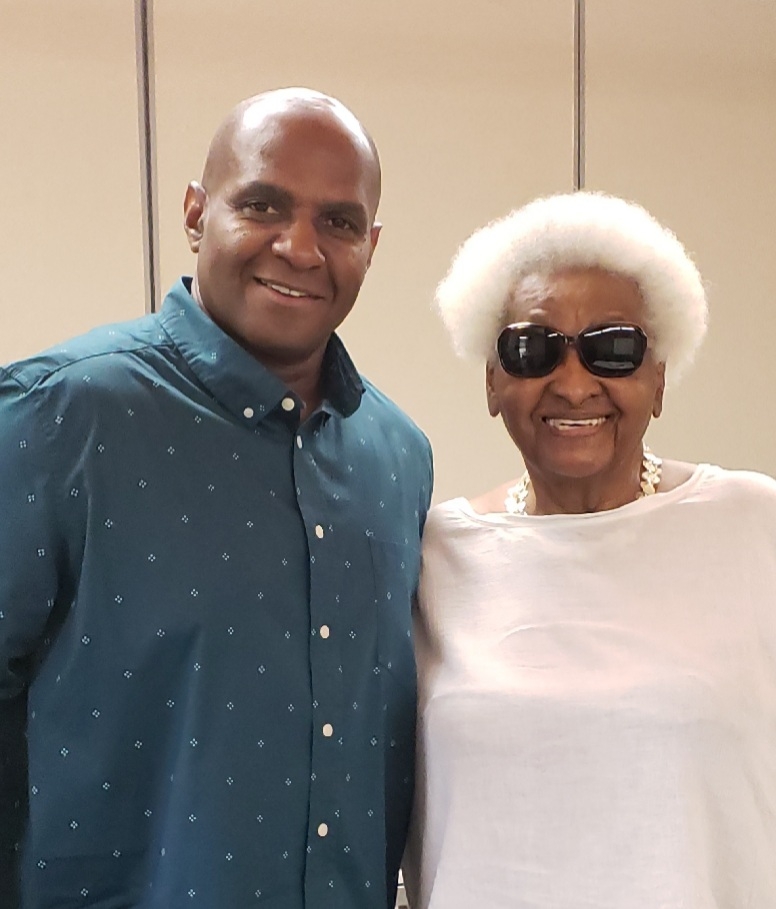
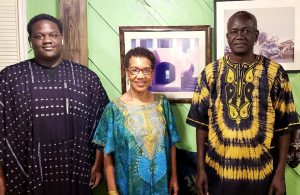
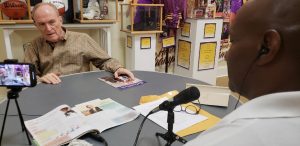
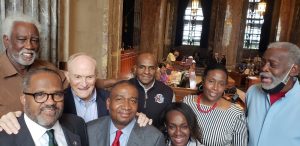
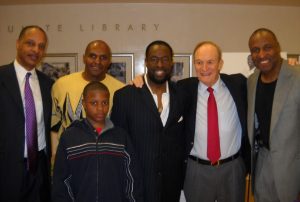
Covers everything from mass incarceration and prison life to reparations with the usual LD engaging point of view. Count Time guests Paul Thomas and Demond Gray discuss how the US justice system functions as a bank (commerce), how it functions on a penal sum and continued use of humans as property and assets.
Selected quotes and notes from Count Time Podcast with LD Azobra, Paul Thomas and Demond Gray will define count time and much more.
Good evening. Good evening. Good evening it’s 4:00 PM. Stand up it’s count time, time for every man and woman to stand up and be counted. Welcome to another edition of Count Time podcast. I am brother LD Azobra formerly named Lyman white. Thank you for joining us today.
We have two special young men. They were very instrumental in directing, guiding informing. There’s so much they’ve done for me. I ask them to come on, where we can have some dialogue, where we can sit here and share some paths and the future on where things are, where things are going. We might be talking from mass incarceration to reparations. We gonna have a lot going on here today.
I got my dear friend, a very smart brotha, brother Paul Thomas. Welcome today Paul.
PT Thank you, Mr. LD. Glad to be here.
LD And I got my other dear friend here. These are young men, much younger than me. I got Demond Grey. Welcome to Count Time Demond.
DG I’m happy to be here. Mr. LD.
LD Look forward to a great dialogue this evening and we’re going to have more than just great dialogue. What did we call it back in the day? Because we sitting here doing what?
Chopping it up, chopping up, kicking it like they say, talking about it.
LD All right. They the one back in the day talking about chopping it up. But these are the young men who truly know what Count Time is all about. Brother Paul, tell them what Count Time is all about. What is count time? How did we get to know about count time?
PT Well, it depends if you’re talking about being accountable or if you’re talking about federal prison. They both go hand in hand. And when I first heard you use the term count time, I was thinking every woman and man as it relates to moral obligations what you are doing to benefit of all How are you being accountable for your actions then the other side?
Because I experienced the other side. I had a flashback. You say count time from federal prison. So, yeah, that’s just my thoughts on top about the issue. You don’t want to experience the second part of count time as we all did. What is it exactly that you want to know about count time?
LD Okay, that’s what we are here to share with everybody, we want Demond to tell everybody. What do you know about count time? How are you familiar with the term count time?
DG Well, unfortunately, like Paul mentioned, I learned about count time from being in prison. And that’s a road that I hope more people do not take. in prison There’s a certain time of the day where each inmate has to be accounted for. When the guards come in and they holler count time, everybody comes out of their cells, they stand in front of their cell block at attention, and they have to stand there at attention until each inmate is counted.
And if the numbers don’t match up, then the guards are gonna go and count again and count again. And you’re gonna have to stand there. If it takes an hour or 2 hours, you’re going to stand until each inmate is accounted for
LD Got to be right.
DG The count got to be right. That’s a good. Right.
LD So we all had an experience with Count time. What happened with this experience is that we was in prison, but also the prison. It had us in. Lock down.
The prism. The prism of light have shined up on us. So we’ve been enlightened with the prisms of light. All the different lights coming through these two young men. Have opened my eyes of understanding to a whole. other level
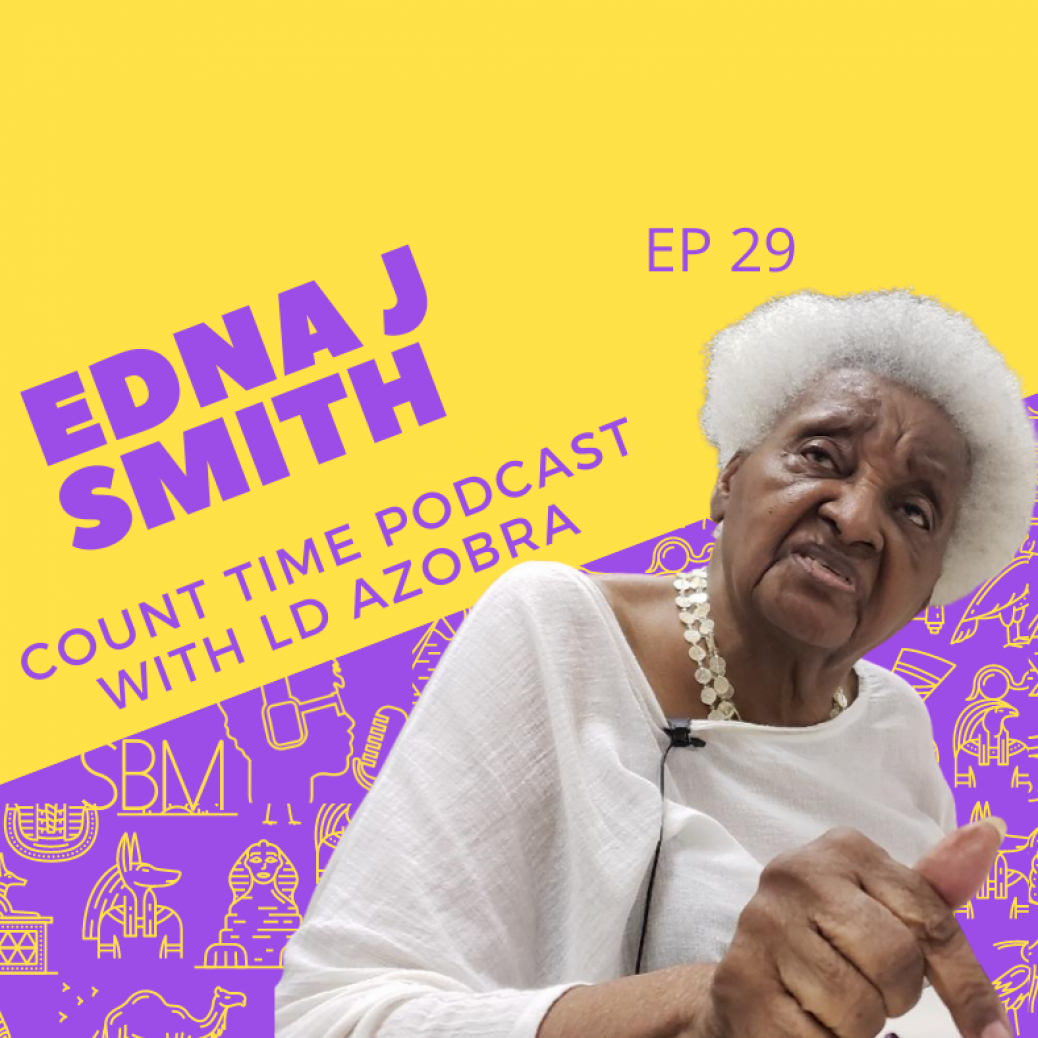
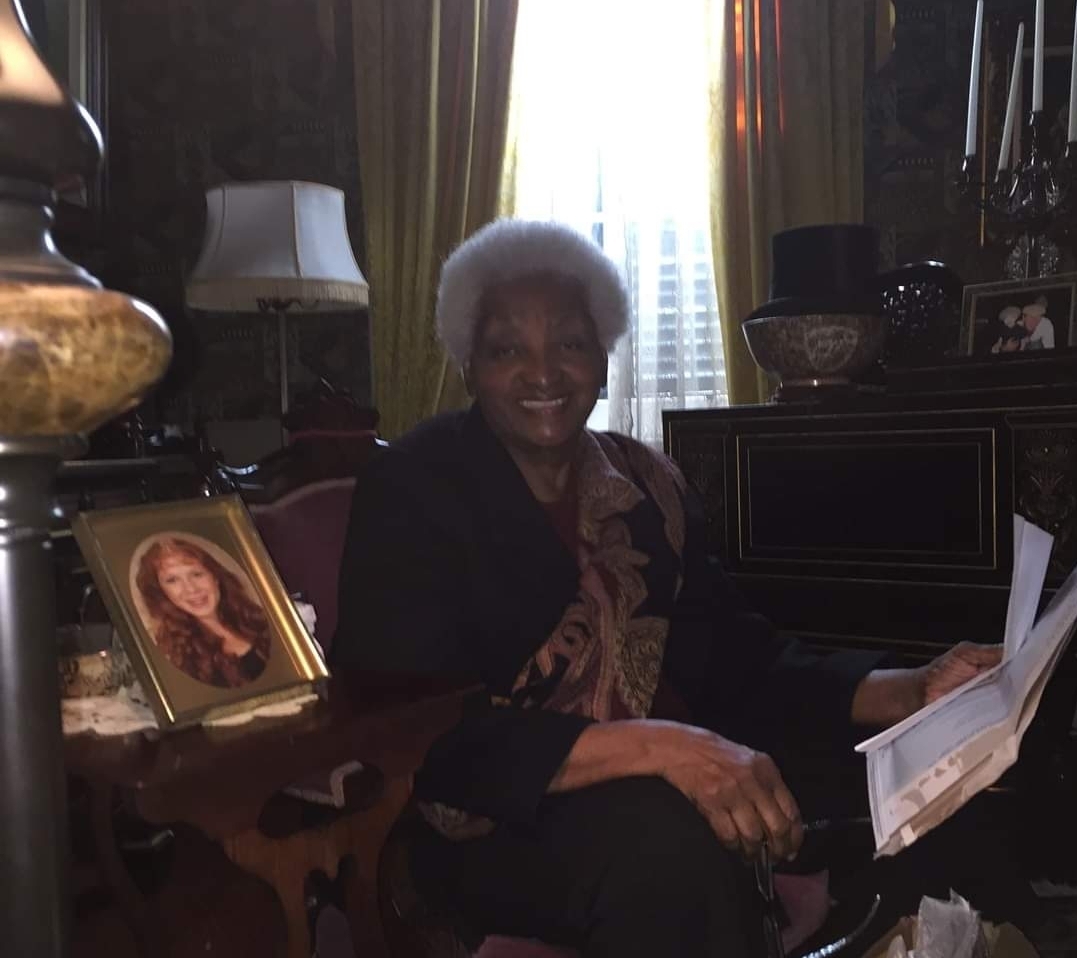
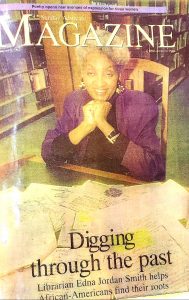
Part II of Interview with Edna Jordan Smith she describes the visit she organized to Canada and Underground Railroad sites. A podcast on history with more on Louisiana, Creole and Haitian history. Edna Jordan Smith holds a Masters of Education Degree with an emphasis in Historical Research. She currently teaches Genealogical Research at the Bluebonnet Genealogy Library in Baton Rouge.
Living Legend
Mrs. Smith is the founder of the Afro-Louisiana Historical & Genealogical Society, an organization dedicated to expanding the knowledge base, sources, community consciousness, and education regarding the historical, cultural, and genealogical heritage of African-Americans in general and Louisianians in particular. She has taught history for more than 20 years. During that time, she has become an expert on the subject of Louisiana History for people of African descent.
If you haven’t yet, subscribe to the Count Time Weekly Alerts. Let us know below what you think of the show and suggest topics for future episodes. Scroll down to the bottom of the page and leave a comment for LD Azobra.
Selected quotes and notes from Count Time Podcast on History with LD Azobra and Edna Jordan Smith on Louisiana History.
The creation of Afro-Louisiana Historical & Genealogical Society (ALHGS) was inspired by the encouragement of Ms. Jean Sampson Scott, an officer of the National African American Historical & Genealogical Society in Washington, D.C. It was through her friendship and generosity, coupled with her selfless guidance that ALHGS became a reality and was incorporated in 1987. It is in her memory and the need of a people that the work of ALHGS continues.
Good evening. Good evening. Good evening it’s 4:00 PM. Stand up it’s count time, time for every man and woman to stand up and be counted. Welcome to another edition of Count Time podcast. I am brother LD Azobra formerly named Lyman white. Thank you for joining us today.
You used to take trips to bring people to Canada. You started talking about it. Now how did that come about?
EJS Let’s tell you a story on that. I was reading a book. I still have to. Saw it this morning on places in this country, cities and towns and all that. And I read this story about Reverend William King. This is a man his people came into this country from Ireland during the Potato famine over there. But he became well go back He came looking for a job. But at that time over in Clinton, Louisiana.I mean Jackson Louisiana there was a big University part of that is still sitting there. Dormitory, that beautiful. building is still sitting there. And that was during slavery time.
LD Where on Southern campus.
EJS No, it’s in Jackson, Louisiana.
LD Oh the Centenary. Yeah the Centenary
EJS Yeah, that’s right.
LD I went there with you years ago. One of your trips it was with River Road, African American Museum, along with the state Museum conference.
EJS I started having trips for a long time. I was going to do things like Gettysburg. Harriet Tubman Underground railroad Yeah.
LD That’s why we was in Jackson. You was showing us that as part of the Underground railroad.
EDS Yeah, that’s what it was.
Home to Buxton (1987)
But those people out of Canada came, and whenever some of them come this way, they always contact, they were on this big boat. That big thing that comes out of Tennessee that travel with people like the queen something. It’s a big boat and things on the side. Well, some of them I had met and they came a few years ago in the 80’s. They brought a bus of people from Canada, and I took them on. We had stuff at Southern for them, and I took them on to
LD University?
EJS Yeah. I took them on up there. All of that took them through St. Francisville and people in Jackson because Rev. King was there. And he inherited 15 slaves. He hated slavery. He and his brother were, his brother came to Jackson and became a Mayor in Jackson. But they were living in Ohio after they left. An Rev. King wound up marrying, Mary Morning Phares P-H-A-R-E-S. And they had a son. But Rev. King
He was able to escape out of there with those 15 slaves got into Saint Francisville, took that into Ohio, so he had to escape with. Yeah, but he was a freedman.
LD And, of course, but he was of the European descent? So why he had to escape if he was a European with
EJS He didn’t want them to see him taking no slaves out of there. He had 15 slaves. He had to get out of there.
LD Now this part of the underground railroad or before underground railroad?
EJS Well, they were having the underground railroad. and in places like that, Like Harriet Tubman and all of them.mBut he had inherited these slaves, but he did not want to leave. He hated slavery when he was living in Europe, they had big things over there that he was part of detesting slavery because they had it over there too. and so Rev. King took his chances. But he got attention of a lot of people on the ship. That from Saint Francisville. That’s where he left from. And each of them. And what was it? He had all these slaves. He didn’t go to Canada at first he went to Ohio near Toledo, Ohio. He left him there with his family. He had all his brothers and his dad, and he went to Canada. And he bought 2000 acres of ground in Canada.
Dr Seck continues in Part II discussing religion, spirituality and superstition, Covid-19, rites of passage and his optimism for the future. Dr Ibrahima Seck is co-founder of the Whitney Plantation Museum where he serves as Director of Research. His research is mostly devoted to the historical and cultural links between West Africa and Louisiana. He is joined on this episode by Dr Joyce Jackson Chair of the LSU Department of Geography and Anthropology.
Living Legend
If you haven’t yet, subscribe to the Count Time Weekly Alerts. Let us know below what you think of the show and suggest topics for future episodes. Scroll down to the bottom of the page and leave a comment for LD Azobra.
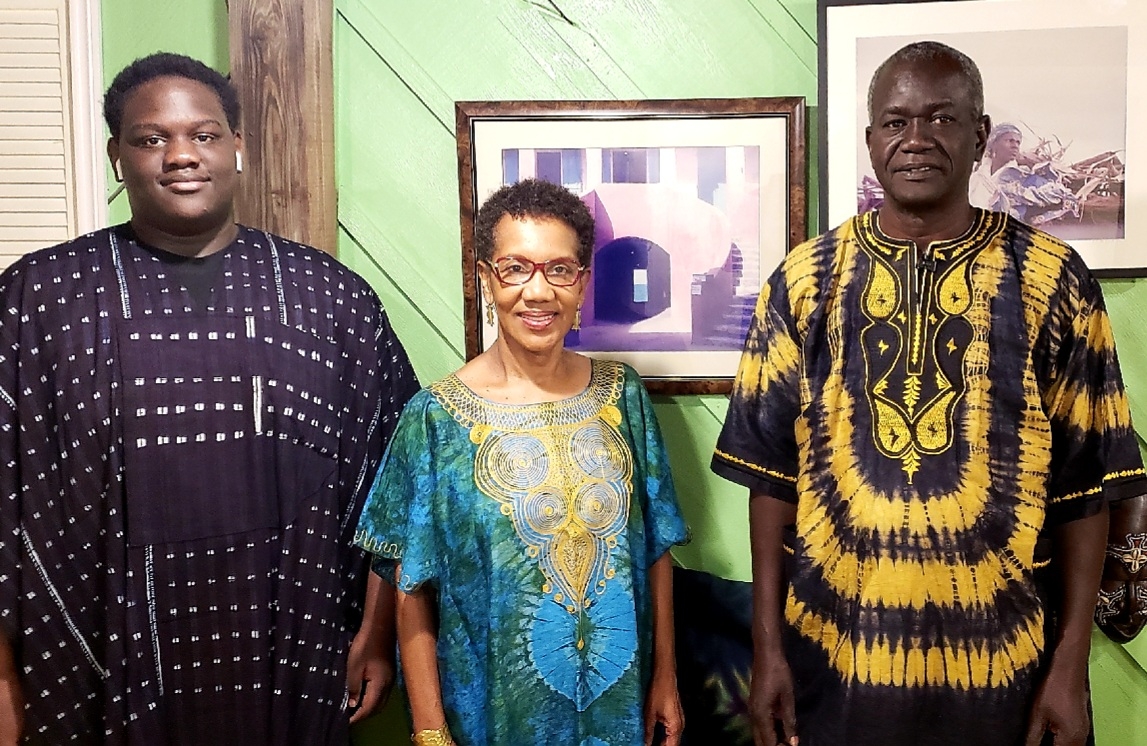
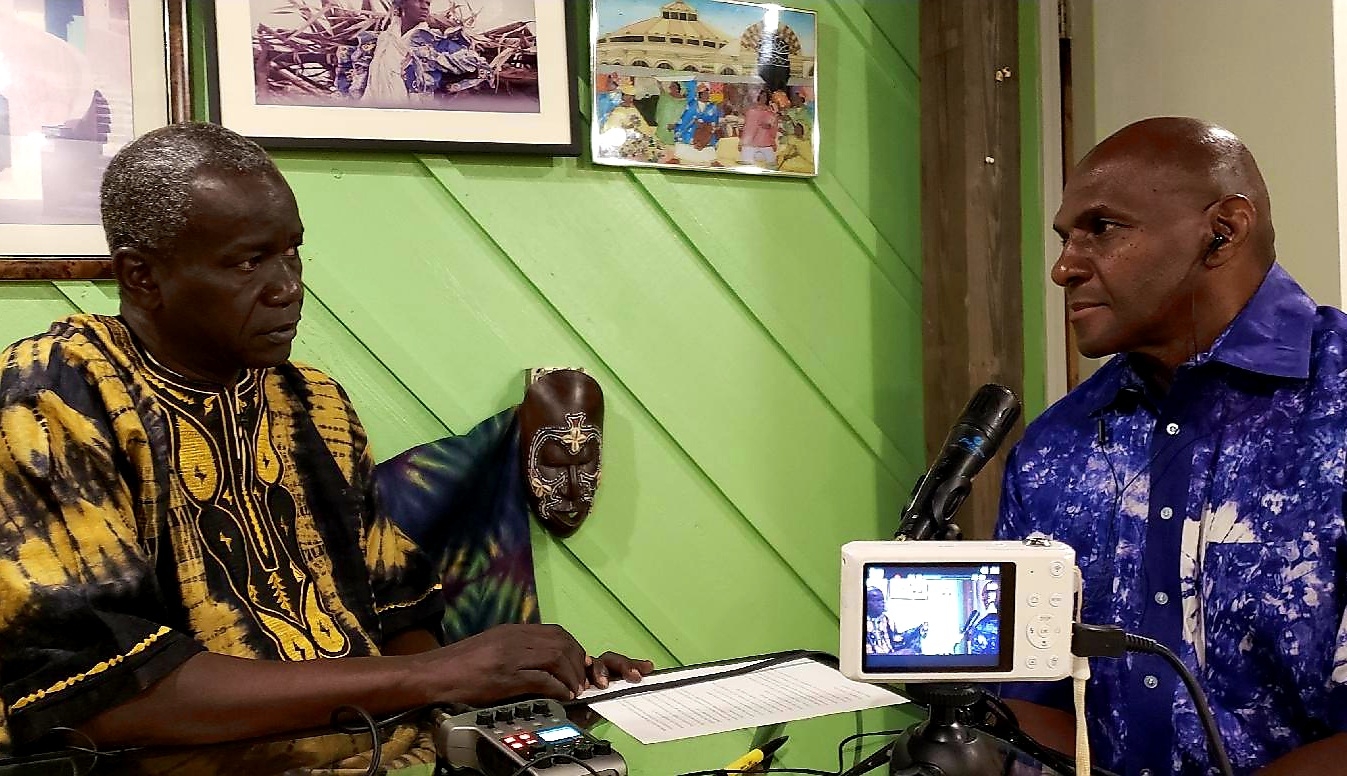
Dr Seck with his son and Dr Joyce Marie Jackson
Selected quotes and notes from Count Time Podcast with LD Azobra Interview of Dr. Ibrahima Seck Pt2
Good evening. Good evening. Good evening it’s 4:00 PM. Stand up it’s count time, time for every man and woman to stand up and be counted. Welcome to another edition of Count Time podcast. I am brother LD Azobra formerly named Lyman white. Thank you for joining us today.
Good evening. We’re back once again here with our dear brother, scholar, author, historian. We have to do it. It was so good the first time we had to come back to there’s just so much information, so much knowledge. I don’t know. We still going to be able to get it all this time, but we can do the best we can. We have her Doctor Ibrahima Seck.. But first of all, I met Brother Ibrahima years ago. I was on the board of the River Road African American Museum, we was on the Tezcuco plantation at the time. And at that time our President was Madam Chair right now of LSU, Doctor Joyce Marie Jackson, who is here with us today. Welcome again, Doc.
Dr Jackson
Hello. Thank you.
LD
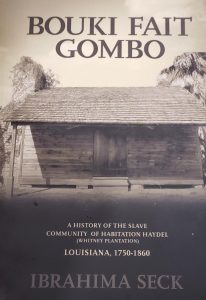
And we will have her participating, too, in the interview is not interview with this conversation and discussion, but we have Brother Ibrahima Seck here who wrote his book on book. Fait Gombo. We got Gombo around here. So that’s how we going to say Gombo, which is a book about the history of the slave community of Habitation. Haydel at Witney Plantation. So we are here.
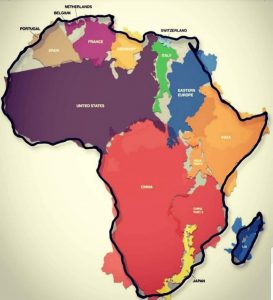
Actual sizes compared to Africa
First of all, we want to talk about the big thing that has been in this country for the last going on two years now and it’s kind of weighing everybody down. But I want to know, how are they dealing with this in your country? The covid 19. How is that affecting the people there? The income, people working. Can people work? People getting out people being able to sell their products. What’s going on? in Senegal with covid 19.
Dr Seck
Covid-19 really started hitting us in February 2020. In the first case was a Frenchman from France. There was a lot of scare, of course, and the government took a lot of decisions. Hard ones like confinement. It wasn’t really real confinement because still people could go out and work on the daytime, wear a mask.
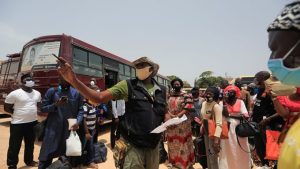
Teachers in Dakar, Senegal wait to board government chartered buses to go back to schools in countryside towns amid travel bans between regions due to the COVID-19 pandemic. Zohra Bensemra / Reuters
And we have a curfew starting at 08:00 and it lasted about three months. And then they lifted the curfew. But during the first wave, we did really well, very low rate of infection. Very few people died of it. But for the the next wave, of the Delta variant of the virus, it was worse but still under control. At one time So far, according to official records, we have 1,826 who died from it since it’s been
LD
In the country of Senegal?
Dr Seck
in the country 1,826, out of a population of 16 million people.
Insightful discussion on the cultural ties between Louisiana and West Africa as Dr. Seck “awakens the mind!”
Living Legend
Dr Ibrahima Seck is co-founder of the Whitney Plantation Museum where he serves as Director of Research. His research is mostly devoted to the historical and cultural links between West Africa and Louisiana.
If you haven’t yet, subscribe to the Count Time Weekly Alerts. Let us know below what you think of the show and suggest topics for future episodes. Scroll down to the bottom of the page and leave a comment for LD Azobra.
“Until the Lion writes his own story, the tale of the hunt will always glorify the hunter.” Thanks for letting the “Lion” speak! Dr. Seck’s podcast was excellent in every way and I learned and re-learned much about African and world history. Indeed, slavery was a world system that sought to exploit Black people everywhere. In October, I will participate in a panel on “Louisiana Black Massacres.” Same old story about Black domination, exploitation, subjugation, and annihilation.
Dr. Tom Durant
Selected quotes and notes from Count Time Podcast with LD Azobra Interview of Dr. Ibrahima Seck
Good evening. Good evening. Good evening is 4:00 PM. Stand up. It’s count time, time for every man and woman to stand up and be counted. Welcome to another edition of count time podcast. I am brother LD Azobra formerly named Lyman white. Thank you for joining us today.
Today we have a special special guest, a brother by the name Dr. Ibrahima Seck, author, professor, historian, student of Cheikh Anta Diop. That’s the way we say Diop right? The writer of a book called I can’t pronounce it Bouki Fait, Gombo.
Dr Seck
Bouki Fait Gombo.
LD
that’s French. I can’t say it. I’m getting I’m getting it. In America. We got a term that says Straight out of Compton, straight out of Africa. We have a real brother here. And we honored to have you. And especially we feel very special to have you. Welcome to Count Time, Doc.
Dr Seck
Thank you so much. My brother LD. I feel so proud to be your guest today. And I don’t have often the opportunity to talk because so many people don’t want me to talk. They don’t want to hear my message.
Of course I’m not talking about African and African American brothers. Somewhere somewhere out there, there are some people who don’t like to hear about the truth. But you know what Truth like we say in Senegal is like fire. You may choose to sit on it, but not forever. Not forever. Yeah. Just like fire.
LD
So we going to expose something here today. That’s what Count Time was all about. We here to awaken those who are civilly dead by awakening the mind. So that’s what you’re about to do here today. You’re going to waken the mind?
Dr Seck
Absolutely.
Dr Seck with his son and Dr Jackson
LD
So the same thing was going on in this country has also been duplicated?
Dr Seck
You have so many parallels. Like what I told you when you were facing the slave trade over there, the destruction of life, permanent warfare that was promoted by European companies.
You were suffering slavery here.
And then they said, 1865 13th Amendment slavery is over. But they reinvented it under another name, Jim Crow. He lasted 100 years at the same time.
You know, when the French, British when they conquered West Africa, the French started to on the conquest of West Africa In 1855. They started in Senegal. And they said, Slavery is over. In 1848, they say abolition, no more slavery in Africa. In this country. Then they drafted the former enslaved people into their own army. And they reinvented slavery under another name. They did not call it slavery. They call it force labor, travail forcé.
What is the difference between forced labor and slavery?
And they have also their own Jim Crow. Los Hashim Delan Dijana trust means black codes for black people in Africa. They have black codes, mass incarceration.
LD
So Senegal had Mass incarceration?
Dr Seck
Absolutely.
LD
And they still have it?
Dr Seck
No. That’s what they were doing. Our own Jim Crow.
LD
So you all had Jim Crow?
Dr Seck
Jim Crow was everywhere, you know. And they are also not only they put people in jail so easily to have free labor, but also they had a role or black code that divided people in two sections. Like people born along the coast, like Dakar San Luis Gory Island they were recognized as French citizens. And many of them were used in the French administration. Divide and conquer, just like on a plantation. So the vast majority of people were considered as subjects of France. And every year they drafted young people. One section of those drafted people were taken into the French colonial army.
In the beginning, it is just one big group. But not everybody ended into the military. One section. The first portion, they call it a prime portion, goes into the army. And there was a person who was taken into work camps. Just likely they used to do here and in Mississippi.
All over these people go into the army. They have weapons. They have their uniforms and the other side, the other section. They were just given like shovels and picks and whatever and taken into work camps, building roads, cutting down, clearing the wilderness.
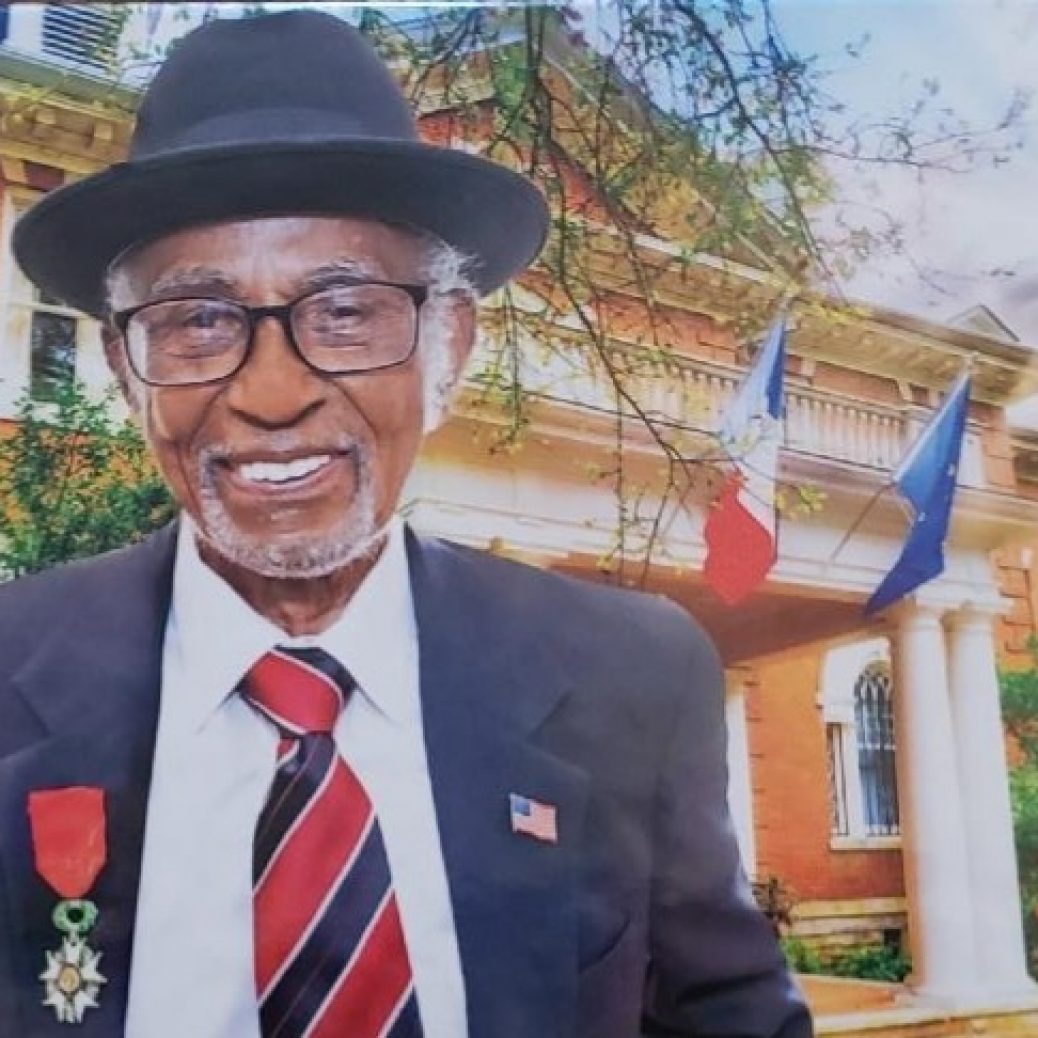
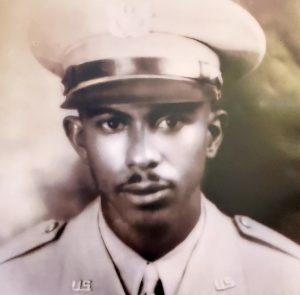
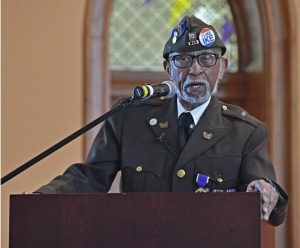
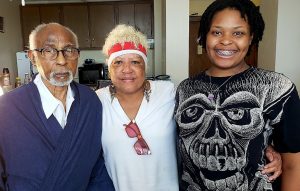
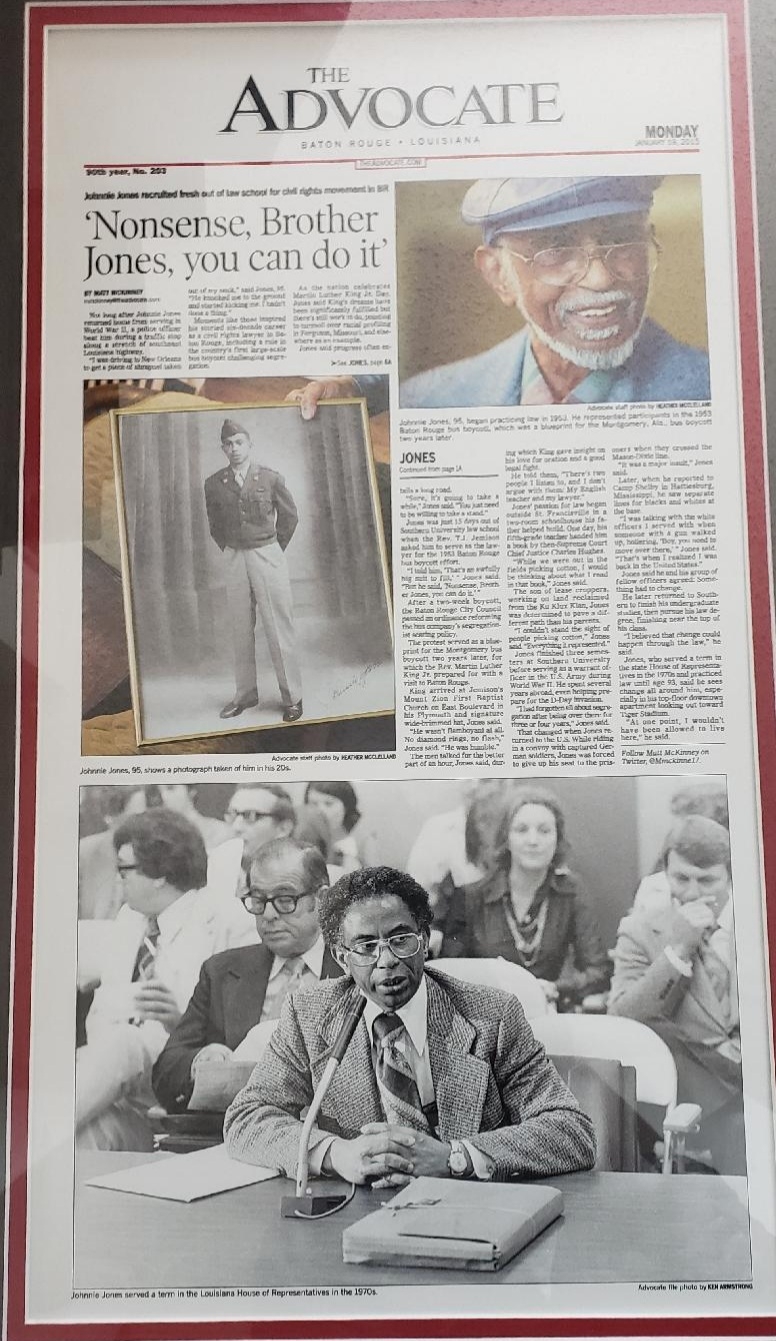
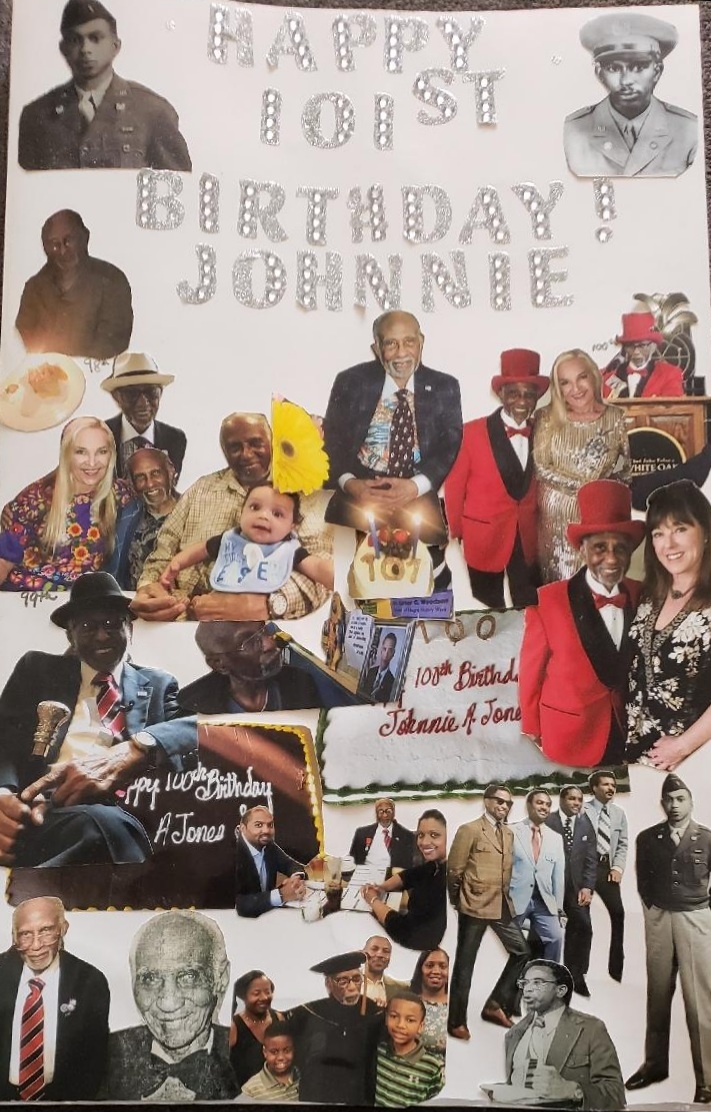
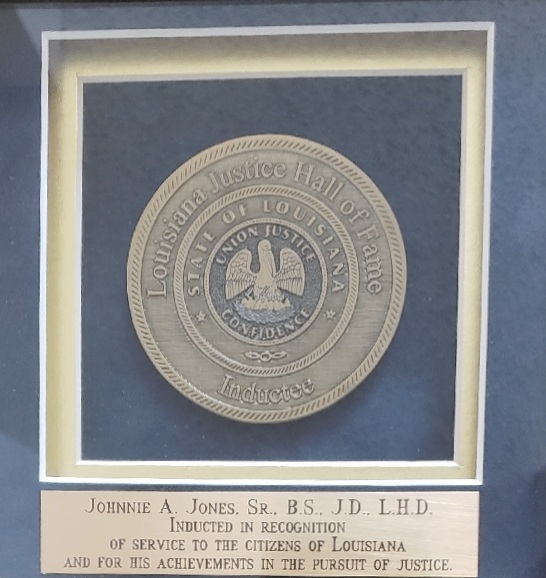
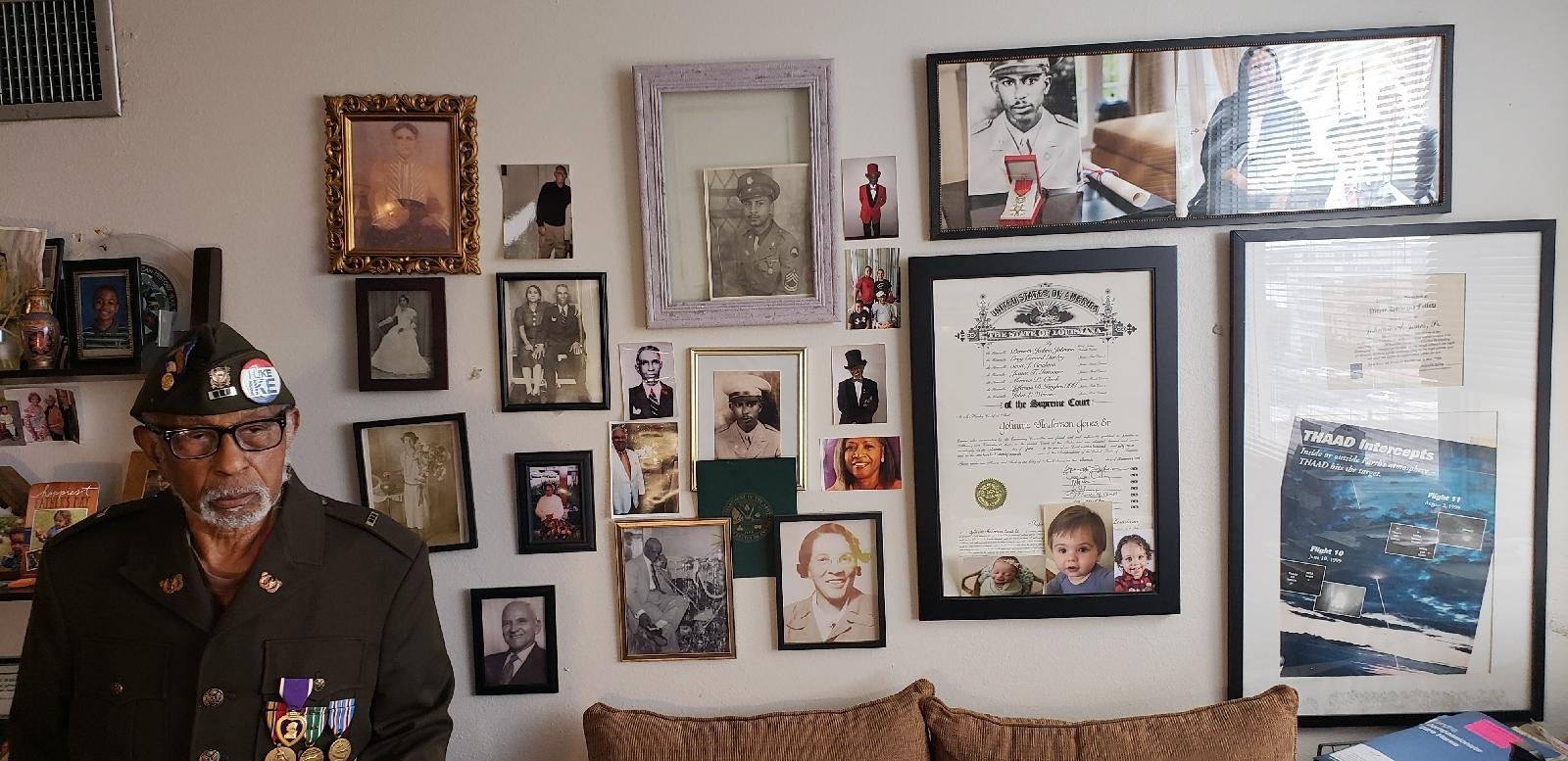
LD Azobra interviews 101 year old Living Legend and Civil Rights attorney Johnnie A. Jones Sr.
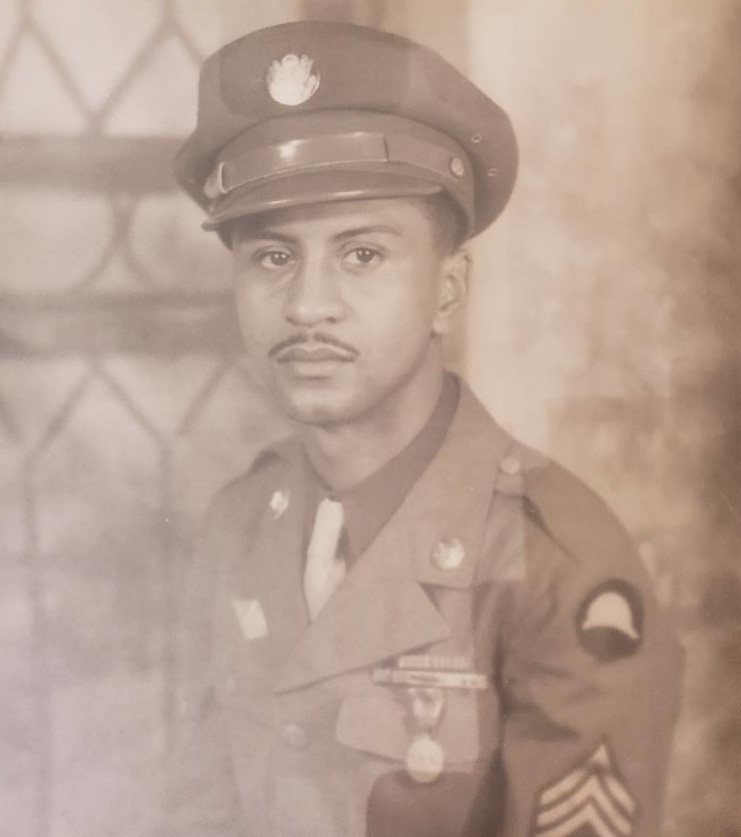
Dr. Jones recounts growing up in Louisiana his work on the Baton Rouge Bus Boycott, numerous cases, student activism at Southern University and the Baton Rouge NAACP and his encounters with General Eisenhower and involvement in the D-Day invasion and his upcoming visit to the White House to meet with President Biden. A funny engaging account of a life well lived, and the limitations of his time that he refuses to accept.
If you haven’t yet, subscribe to the Count Time Weekly Alerts. Let us know below what you think of the show and suggest topics for future episodes. Scroll down to the bottom of the page and leave a comment for LD Azobra.
Rep. Troy Carter congratulates Johnnie A. Jones, Sr.
Selected quotes and notes from Count Time Podcast with LD Azobra Interview of Living Legend Johnnie A. Jones, Sr.
LD:
Good evening. Good evening. Good evening it’s 4:00 PM. Stand up. It’s count time, time for every man and woman to stand up and be counted. Welcome to another edition of Count Time podcast. I am brother LD Azobra formerly named Lyman White. Thank you for joining us today. (listen to why I changed my name, it’s not what your thinking)
We have one of the true Living legends the honorable doctor, attorney Johnny Jones, Sr. This young man here is 101 years old. He was born in 1919.
Johnnie A Jones, Sr Yeah, 1919. I’ll be 102. November the 30th.
LD Azobra How do one live to be 100?
Johnnie A Jones, Sr How did I live to get to be a hundred?
LD Azobra Hundred and one?
Johnnie A Jones, Sr I don’t drink and I don’t smoke. I got drunk at eleven somewhere around ten or eleven. I went into my, we have a lot of wine and stuff I put in my house and I got drunk.I went in the pantry the cellar would went to the pantry that’s what they called it then, went into wine. When I left out, I was sick as a dog. I got so drunk and I haven’t drank since!
When they drafted me out of Southern University I went and reported just like everybody else. When I got to my Draft Board they said we gone send you to Camp Cleveland. I said not today.
You see, I say, but I’m going. But I’m going to finish this semester just like LSU students. And that’s it. When I came back, everybody say, oh, he rejected. He was rejected. Mama, my dad was so scared he didn’t know what to do. Dad say, boy they going to kill him?
So.
No, I say, I let me tell you, when I finish this semester, I will go. You won’t have to come for me. I say I’ll come down here and tell you I’m ready to go. And if then you don’t take me and Southern University have a 15 days open for you to go and matriculate. Matriculate means to register to go to College. And that word is matriculate.
And I say, you got 15 days. now. Within these 15 days after that semester, I’m going to stay out. On the 15th day, I’m going to enroll again. This the Draft Board I’m telling that.
And I say, when that happens, you’re going to have to go through the same thing again because I’m not going to be a Sophisticated Jeff. Just let you push me around.
I’m going to go out there and fight for freedom and then come back here and you can’t sit down on the bus.
Everything I’ve done I’d do it all over again. And if I could and right now I would do as much as I can. That which you can do for yourself, you don’t need for someone else to do it, go on and get it done. Well I love this country, I love this nation, I love everybody. I don’t blame anybody for us not doing some earlier, but us.
A true Living Legend she has advanced the practice of genealogy and has stories to tell. From Haiti to the Court of France to Marksville and 12 Years a Slave, Edna Jordan Smith has observed, created and describes Louisiana history.
If you haven’t yet, subscribe to the Count Time Weekly Alerts. Let us know below what you think of the show and suggest topics for future episodes. Scroll down to the bottom of the page and leave a comment for LD Azobra.
Selected quotes and notes from Count Time Podcast with LD Azobra Interview of Living Legend Edna Jordan Smith
LD:
Good evening. Good evening. Good evening it’s 4:00 PM. Stand up. It’s count time, time for every man and woman to stand up and be counted. Welcome to another edition of Count Time podcast. I am brother LD Azobra formerly named Lyman White. Thank you for joining us today. (listen to why I changed my name, it’s not what your thinking)
LD: I like to first introduce to you, one of our local community, true legends in our community have done tremendous, great things. I’ve been knowing her for quite some time. She don’t quite remember me from back in the day. She used to call me Limus nowadays she don’t quite remember, but I don’t know why I didn’t leave a lasting impression upon her. But this young lady named Ms. Edna, Jordan Smith, one of the local, and one of the few, I think she’s created or started genealogy in this community at the Bluebonnet library years ago, when I was doing my little research, everybody sent me straight to Ms. Edna, Jordan Smith, to help me meet my genealogy. Thank you so much because of you. I was able to find a lot of information about my history, my family, and my own culture and where we came from. So I’d like to welcome you here today with our Count Time podcast.
EJS: Well, I’m so happy that you invited me. It gets me to thinking about so much. You have to tell me to shut up some times because I get into things. And then I think of something else and I can never complete a story because
LD: It was never even there. That’s the way life is every story is connected to another story. And that’s why I wanted you here because I wanted you to continue talking. and give as much information as you can, we want to capture as much as we can, but one time, not just new Orleans, but the Feliciano was the gateway into Louisiana, basically
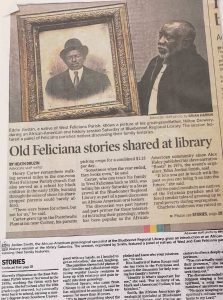
Edna Jordan Smith genealogy article
EJS: Well through slavery. And, uh, of course it developed when you get into places like new Orleans and the, um, the river parishes like St. James St. Charles St. James St. John and Ascension. All of that is brought in following the, the Haitian revolution,
LD: Haitian revolution.
EJS: And of course he did like so many of us do today. When the French wanted to talk to him, they weren’t getting any way in the battles. So they wanted to talk to him. He made the mistake to talk, and that’s where they had it in the France, put him in prison. And that’s where he froze.
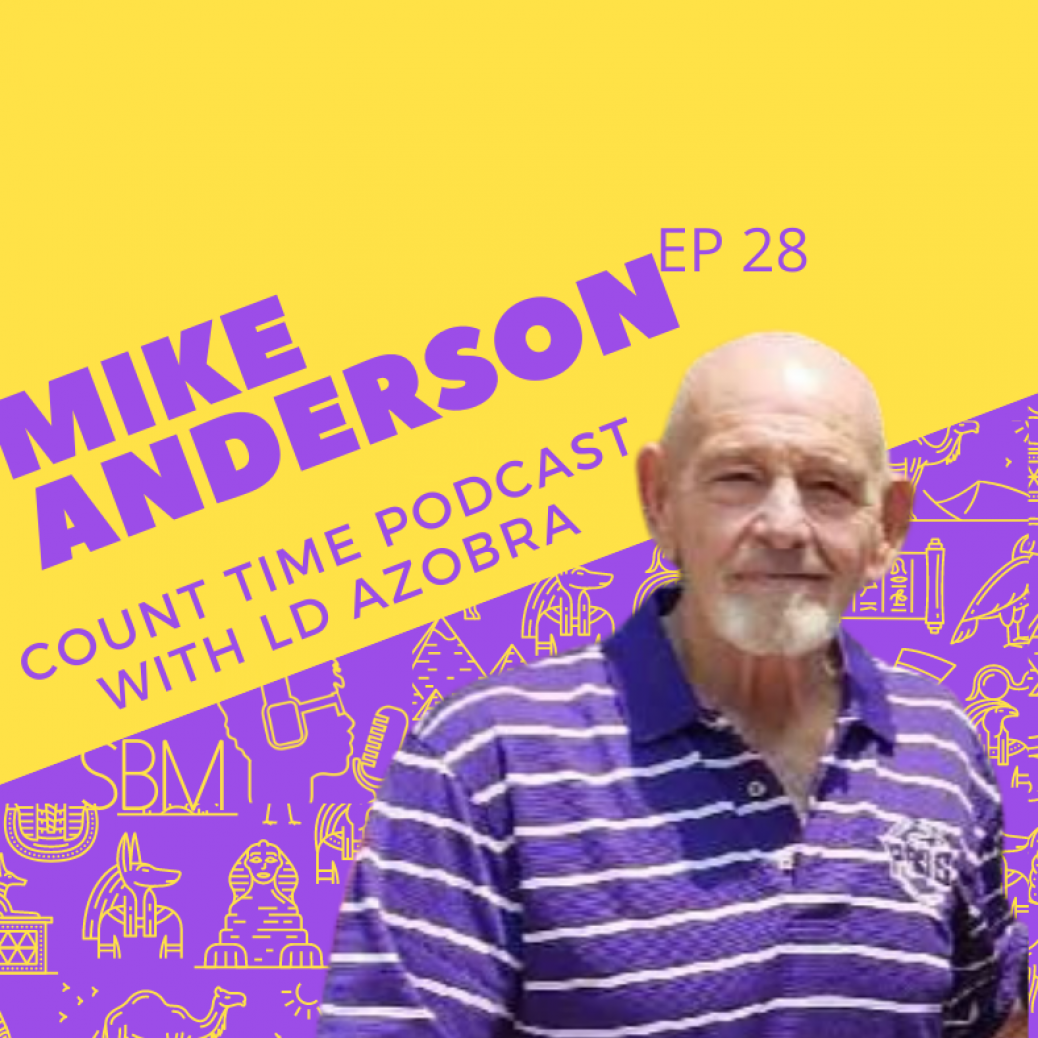
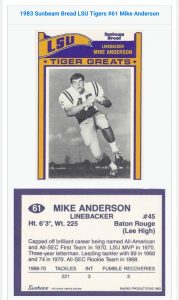
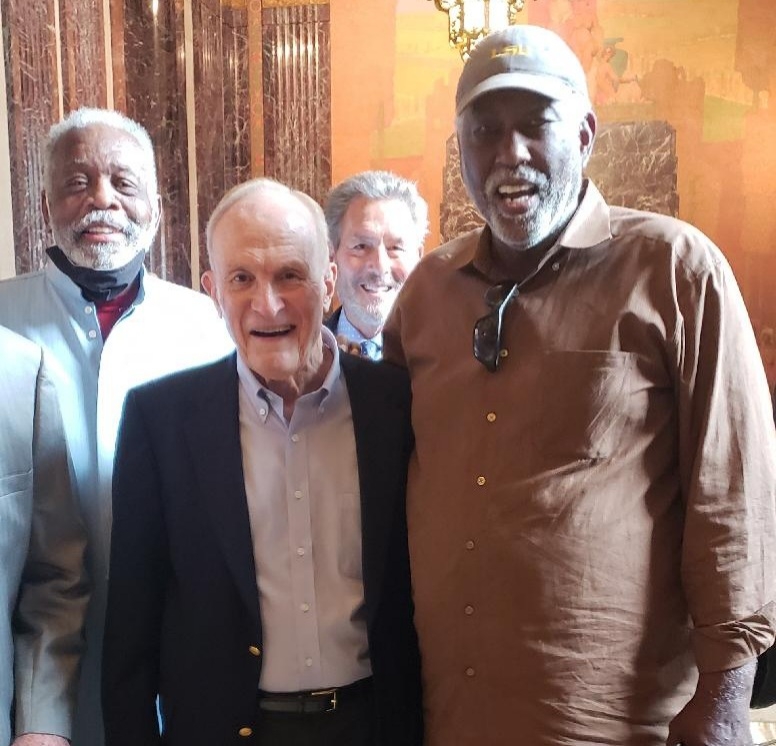
The LSU football Living Legend played for the LSU Tigers and was a consensus All-American linebacker in 1970. Anderson later operated restaurants in Baton Rouge and New Orleans called Mike Anderson’s Seafood. Mike talks about the importance of football in his life and how he came to own a legendary restaurant.
If you haven’t yet, subscribe to the Count Time Weekly Alerts. Let us know below what you think of the show and suggest topics for future episodes. Scroll down to the bottom of the page and leave a comment for LD Azobra.
Selected quotes and notes from Count Time Podcast with LD Azobra Interview of LSU Football Living Legend Mike Anderson
Due to Hurricane Ida some page updates have been delayed. Please check back for notes and pictures. Prayers for everyone effected.
LD Azobra interviews restaurateur and LSU football Living Legend Mike Anderson. He played for the LSU Tigers from 1967 to 1970 and was a consensus All-American linebacker in 1970. Anderson later operated restaurants in Baton Rouge and New Orleans called Mike Anderson’s Seafood. Mike talks about the importance of football in his life and how he came to own a legendary restaurant.
In 2014, he sued the NCAA and Riddell Inc., a helmet manufacturer, seeking compensation for head injuries he sustained while playing college football. He alleged that the defendants failed to protect players from, or to inform them adequately about, brain injuries.
LD: Good evening. Good evening. Good evening it’s 4:00 PM. Stand up. It’s count time, time for every man and woman to stand up and be counted. Welcome to another edition of Count Time podcast. I am brother LD Azobra formerly named Lyman White. Thank you for joining us today.
Today we have a true legend, a Baton Rouge legend. Lsu legend played pro football. But we most know him for his famous restaurant. We got the legendary honorable, should I say honorable? Don’t want to make anyone mad We got Mr. Mike Anderson. Welcome to Count Time, Mike.
MA Thank you very much.
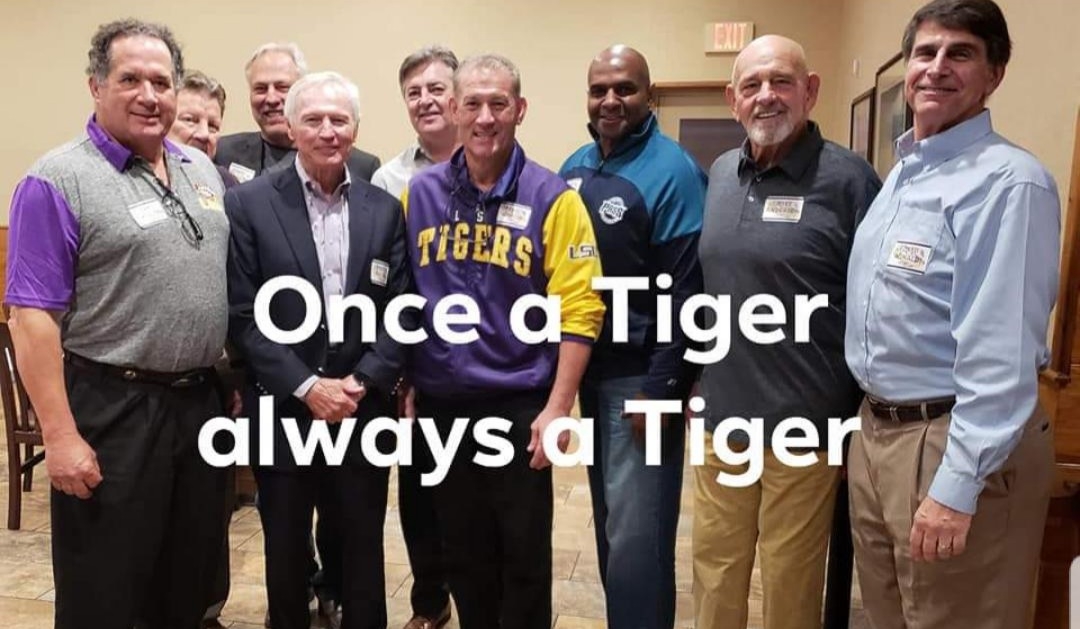
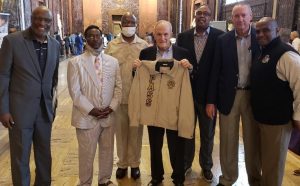
LD And now people don’t figure out. How do you get a conversation with Mike Anderson? I’m glad that really Mike and have been running into each other for the last several years. We got a dear friend named Mark Loins. Every year, Mark host a couple of events at the restaurant at Mike Anderson restaurant for former tigers. And I’m talking about the real tigers, the old tigers. Right.
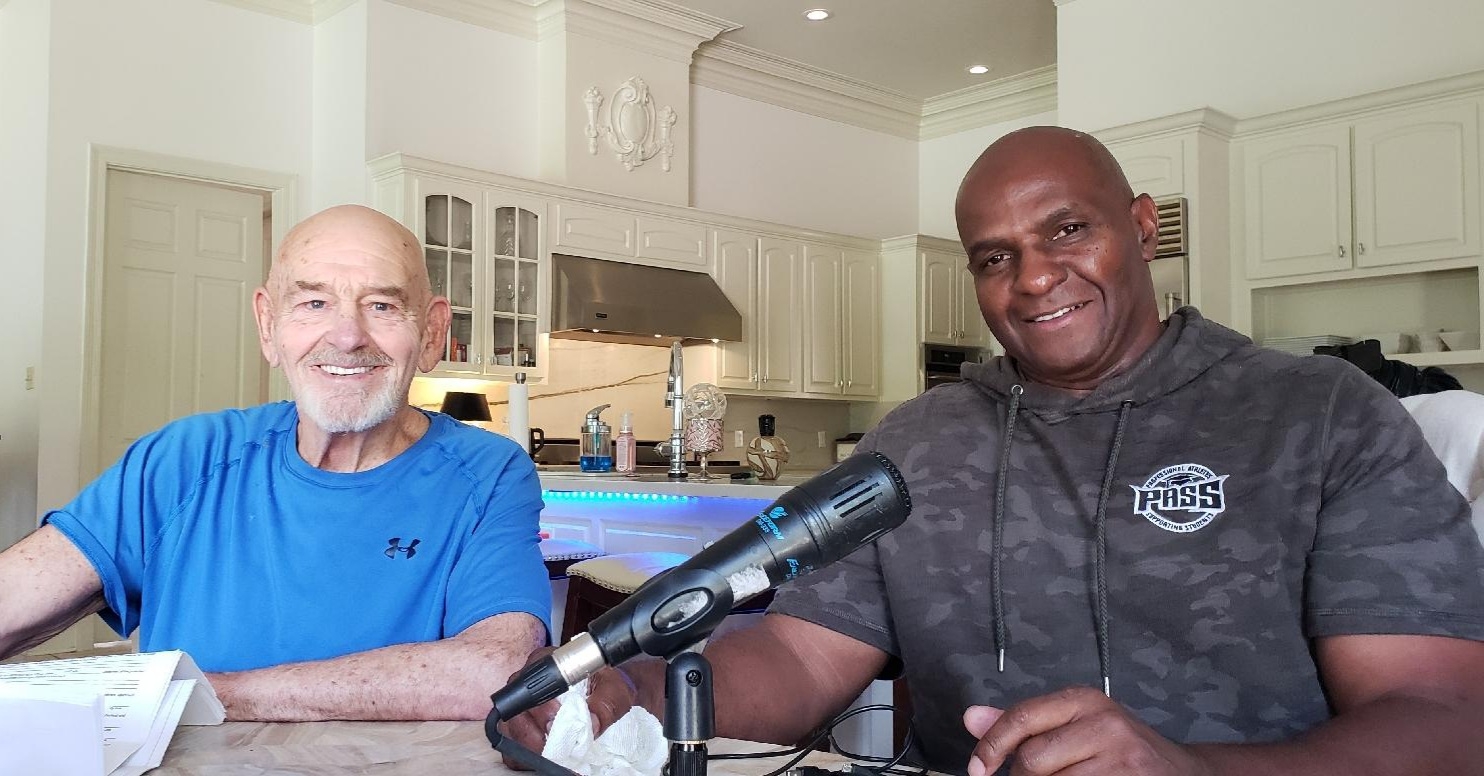
So we see each other that event every year, along with a bunch of other guys coach there so far, Mr. Jimmy Field. And it’s quite a few guys. And we got a chance to talk. I never really knew Mike before. I’ve been knowing of the great Mike Anderson, but I really had not had a chance to speak to him. But last year, I sent him a picture that we had all taken together. So he told me to come to his home and son’s home in the Baton Rouge area.
Mike, what we do, We do a living legend segment, you one of our living legends. So I’m excited to have you everybody know Mike. Mike is the great. He played at Lee High School in the Baton Rouge area. He went to LSU, was All America, and all SEC.
What is Mike Andersons? Mike Anderson’s Seafood is a restaurant established in 1975 by legendary college football great and retired athlete, Mike Anderson. Currently has locations in Baton Rouge and Gonzales, Louisiana
Who owns Mike Andersons? Mike Anderson’s Seafood restaurant has two co-owners Harry and Chip Robert, who are the brother-in-law and nephew, respectively, of founder Mike Anderson, Sr.
How old is Mike Anderson? Michael Howard Anderson was born February 6, 1949
What years did Mike Anderson play at LSU? He played for the LSU Tigers from 1967 to 1970.
What years did Mike Anderson play in the NFL? He was drafted in 1971 in the 9th round by the Pittsburgh Steelers but did not play due to injury
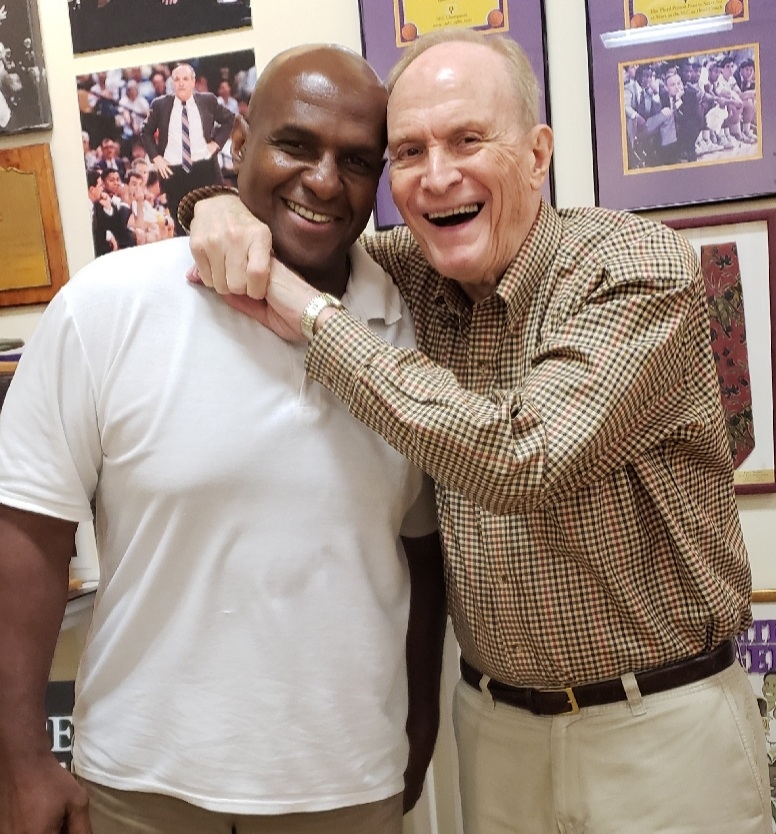
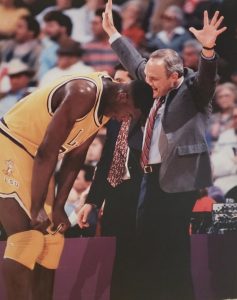
LSU Head Basketball Coach and Living Legend Dale Brown chops it up with LD. The Louisiana State University Living Legend gives an engaging description of his life growing up in “The Magic City” Minot, North Dakota. Coach gives his views on the NCAA, the changes he has fought for during his career, some of which have finally come to fruition. Find out why Coach is considered a players coach as he shares stories about some of his 160 players. Coach Brown and LD give a clinic on overcoming adversity, friendship, loyalty, social justice and the importance of standing up and being counted.
If you haven’t yet, subscribe to the Count Time Weekly Alerts. Let us know below what you think of the show and suggest topics for future episodes. Scroll down to the bottom of the page and leave a comment for LD Azobra.
One of the top motivational speakers in America, Dale Brown served as head coach of the LSU basketball team for 25 years, (1972-1997).
The creator of a syndicated radio program called Motivational Moments that ran on NPR, he also served for a while as a college basketball analyst for ESPN and ABC. As LSU coach, he was twice named National Basketball Coach of the Year, led his team to two Final Fours and four Elite Eights, and emerged as the second-winningest coach in SEC history. He is also known as the recruiter of Shaquille O’Neal, one of the top basketball players ever at LSU and in the NBA. Coach Brown lives in Baton Rouge, Louisiana, with his wife, Vonnie.
After lengthy and heated meeting, LSU approves naming of Dale Brown Court inside PMAC
Selected quotes and notes from Count Time Podcast with LD Azobra – Interview of LSU Basketball Living Legend Coach Dale Brown
LD:
Good evening. Good evening. Good evening it’s 4:00 PM. Stand up. It’s count time, time for every man and woman to stand up and be counted. Welcome to another edition of Count Time podcast. I am brother LD Azobra formerly named Lyman White. Thank you for joining us today. (listen to why I changed my name, it’s not what your thinking)
LD:
Today, we are doing our special segment and we’ve got a very special young man here. We all feel we are honored, enthused, and excited to have the legendary, the great, the famous Coach Dale Brown
Coach:
Azobra, your whole show could be summed up by STAND UP AND BE COUNTED! We can stop right now and concentrate on, stand up and be counted. That’s one of the major problems people have. Silence has always been evil’s greatest ally and whenever evil and good compromise, evil, always wins.
LD:
I’ve been knowing you for quite some time. And I want to start in your days, when you told me about a story, when you were growing up in North Dakota, was it midnot or how do you pronounce that name?
Coach:
Minot.
LD Azobra:
You said that your mother was on welfare and the welfare lady came by and was very rude to your mother, and from that day forward, you decided you were going to fight against injustice.
Coach:
I was 10 years old when that happened. My mother, two older sisters were abandoned by our biological father two day’s before I was born.. My mother moved from the farm, had to move into a one room apartment of above a bar and hardware store. I never slept in a bed for 21 years. Mother had a little bed that pulled out from the wall and I slept in a tiny sofa. My mother was the nicest human being you ever want to meet in your life. Every Sunday she’d come home with this lady, friend of hers. They’d had their cocoa and cinnamon toast. Now, Minot, was a little town. It probably had 25 black Americans. My mother’s friend was black I watched how they bonded and respected each other.
A Very Smart Brotha!
Dale Brown Coach:
I judge people by their heart and their attitude. I don’t care what religion, color, political party they belong to. So until we understand the best potential of me is we, will continue to have these problems. Prejudice has always been a great tine saver because it enables a person to form opinions without bothering to get the facts.
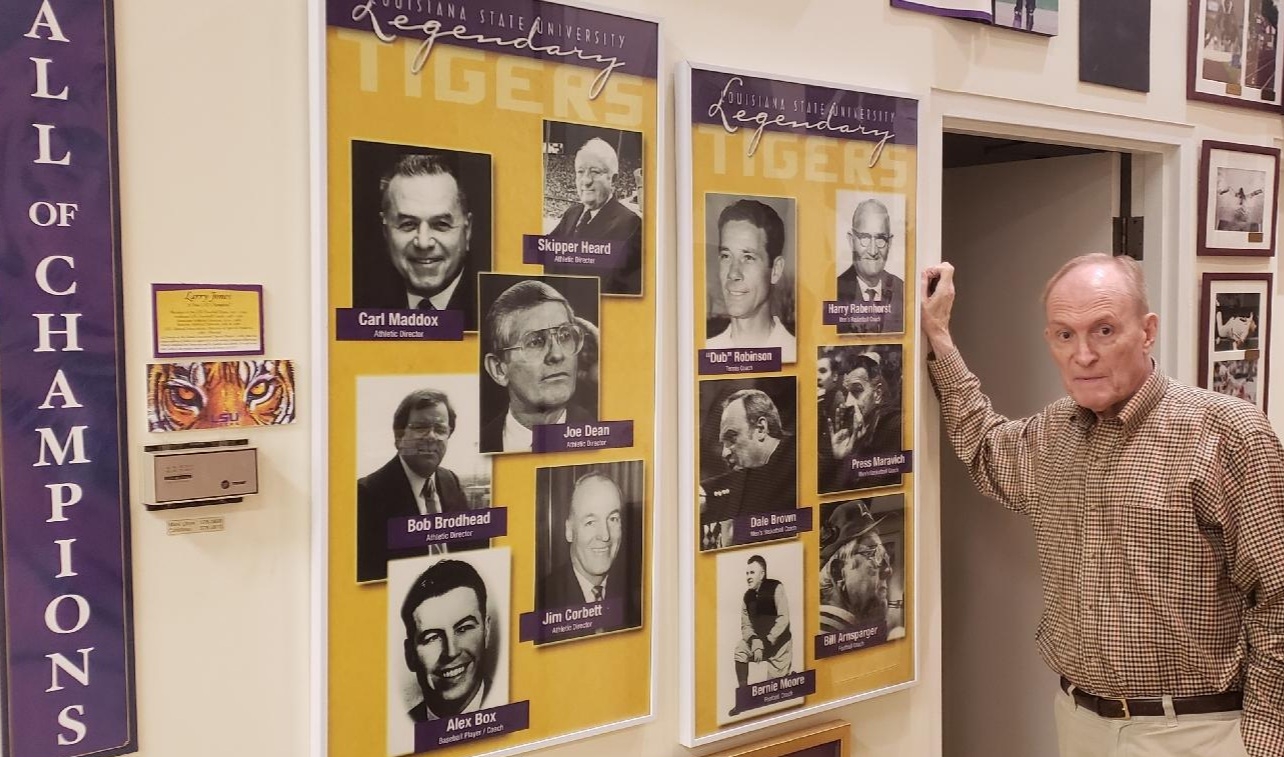
LSU’s Wall of Legends. A true Living Legend.
Coach Dale Brown and Shaquille
LD:
So LSU always had an issue with change?
Coach:
Athletic director Carl Maddox gave me his full support. However, I did get some hate mail and threats. Now, first of all, they knew my philosophy was to recruit human beings first. So no, I got nobody from LSU ever said, oh, how many black’s, how many foreigners you recruiting? I do remember a guy writing a letter. The audacity of Dale Brown, spending Louisiana money recruiting these foreigners. So there’s always going to be prejudice. However, love is the most powerful tool in the world. The only thing more powerful than fear is the boldness of love. How did things work out? They just do.
LD: So that happened in 72. I assume. So, because you’ve been here since 72. Your longest stay been in Louisiana.
Coach: Yeah. We’ve been here. Well what? 50, 49 years.
LD: So, but also when you arrived here, you had opportunity. you were also with here too with the infamous, David Duke grand master grand wizard of the KU Klux Klan. Right? How did you deal with that coming from North Dakota?
Coach: There was an incident that happened with Shaquille. Shaquille didn’t have any more idea who David Duke was than the man on the moon. And he interviewed Shaquille, I didn’t know this.
LD: David Duke did?
Coach: No, excuse me. TV interviewed Shaquille. David Duke watched the interview. And in the interview the guy said, what do you think of David Duke being, governor Shaquille says I could care less who governor is, he didn’t know who was running for governor. He was a freshman in college. So then David Duke on a commercial insinuated Shaq was for him. The next morning. who’s standing at my door waiting to talk to me. But Shaquille, coach he says that guy is lying. I never said that. I didn’t know him or he was a KU Klux Klan leader. He said, what can we do about it? I said, I’ll handle it.
Coach:
And he was really shook up about it. So then through good people, they said, well, he’s planning to come to the, to the, I think it was a Kentucky game with six people. I said, no, that ain’t gonna work. So I told the AD and President, he shows up, at the Kentucky game with these six people. I’m taking the team off the court. If we forfeit, we forfeit. If I get fired, I get fired. Well, fortunately he didn’t show up, but I would not have played the game and I would have been fired. I’m sure. I’m not sure because Carl Maddox was a good man.
LD: So I want to read this something I wrote for myself this morning, and I thought about you and this take a few take maybe a minute and a half to read it. I want to be to put this in your obituary one day. When I read it,
Coach: you wrote this this morning?
LD: I wrote this. Dale Brown is a man and a brother who trust is in God. He never meet a stranger. And only level with others about his true feeling, keeping it real and square. He has a grip on truth and righteousness. He’s loyal to all he calls his friends and expect the same to maintain divine order. He came from the north, but remained in the south but forever traveling east towards the light that you may continue to enlighten others.
Coach: Wow.
LD: His travel and studies allowed him to receive many degrees while giving wisdom to many who asked he is the master of his universe. And for that may God get the glory and may His name be written in the lamb book of life forever. That’s my word to you.
Coach:
That’s beautiful. I’d cry but I don’t want to embarrass your daughter. This has really been fun and you know what? It’s too bad. This can’t be played nationally every minute of it. And anybody that disagrees fine disagree.
LD: We ain’t concerned about that this is Count Time.
Coach: I’ve Never done anything that I tried to impress anybody.
LD: You had a way with the players. I mean, with the whole community, everybody
Coach:
Just trying to improve each day and remembering what Oscar Wilde said, “ Every Saint Has A Past And Every Sinner Has A Future.” I am still a work in progress but will never quit trying to be better.
Napoleon Hill is one of my favorite authors said, “When the dawn of intelligence shall spread over the eastern horizon of human progress and ignorance and superstition shall have left their last footprints on the sands of time, it’ll be recorded by the last chapter of the book of man’s crimes that his most grievous sin was that of intolerance.”
LD:
Well Coach we thank you for taking this time out to do this Wonderful, wonderful interview. Now we have done almost two hours.
Coach: That’s unbelievable.
LD: And 50 minutes.
Coach: because of you,
LD: No because of you, and your patience. No, no, no. And I really enjoyed this Count Time.
Coach: I get bored very easy and You didn’t bore me one second.
LD: Well, I gave you a chance to tell your story. That’s what it is, but it’s, it’s a wonderful story. And I had, I had a chance to hear stories I’d never heard before and after being in your presence so many times, you always a lot of great stories. So I appreciate that opportunity to share and the people at count time, remember we got coach the great legendary Dale Brown have graced us with his presence and he shared and open heart today. I hope you don’t have to have open heart surgery, but, uh, it you opened your heart up to us at Count Town.
How old is Dale Brown? Dale Duward Brown was born October 31, 1935
What did Dale Brown do? As the Head Coach of the LSU Men’s Basketball team 1972-97, Brown won 448 games, four SEC Championships and made 13 NCAA Tournaments including Final Four appearances in 1981 and 1986.
Who coached Shaq in college? LSU great Shaquille O’Neal played three seasons at LSU coached by Dale Brown
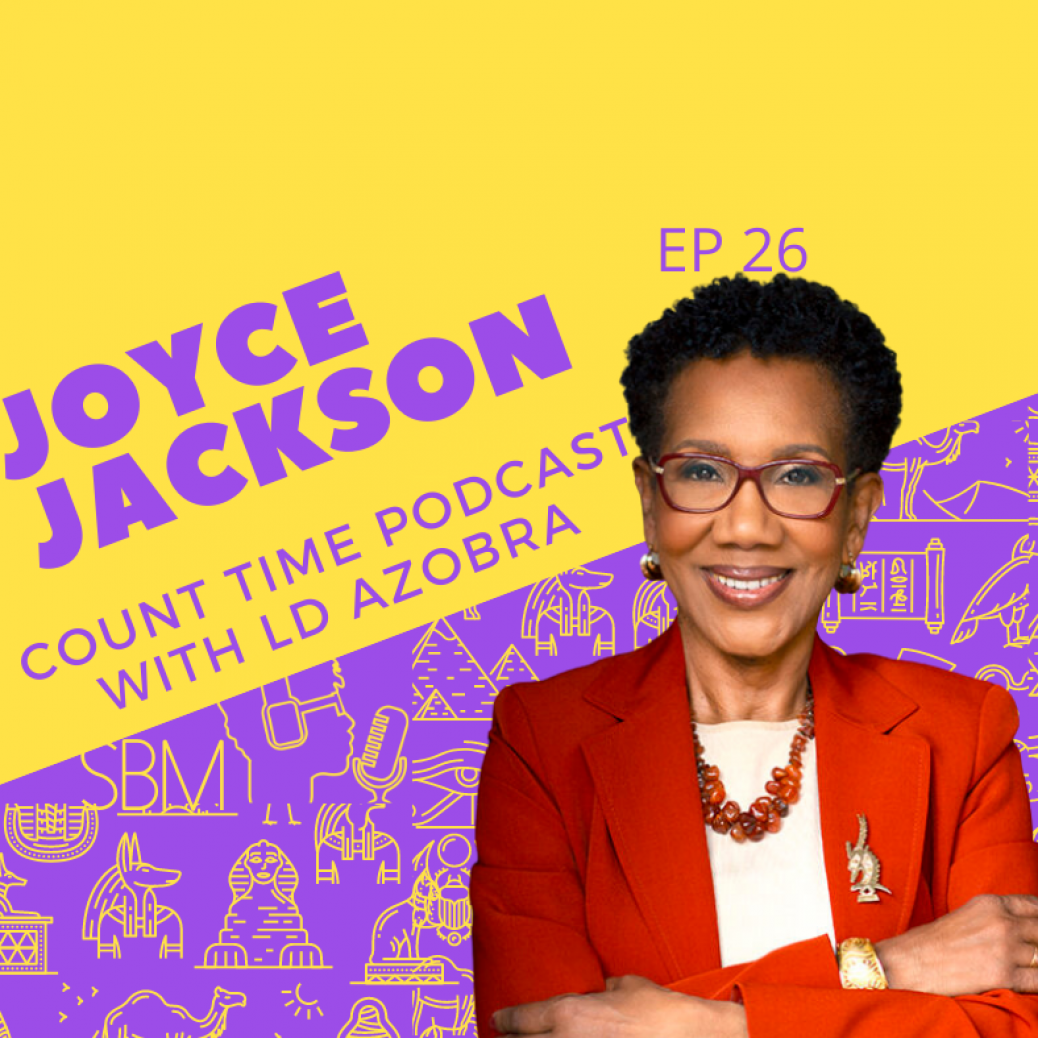
LD has a wide ranging discussion with Dr. Joyce Jackson the newly elected Chair of the LSU Department of Geography and Anthropology. Dr. Jackson describes what it was like in undergraduate and graduate school at LSU during the early seventies, the problems she faces as the first female Chair and person of color and her vision for the future. Great history lesson on growing up in the south, studying African cultures as well as history of New Orleans, Creoles, Indians and Mardi Gras (Carnival) Indians along with LD’s unique take on everything. LD Azobra formerly known as Lyman White gives his thoughts on current events and asks questions like who should apologize. Dr. Jackson also appears on Episode 32 Dr. Seck Pt2.
Please leave your comments below. If you haven’t yet, subscribe to the Count Time weekly alerts. Let us know below what you think of the show and suggest topics for future episodes.
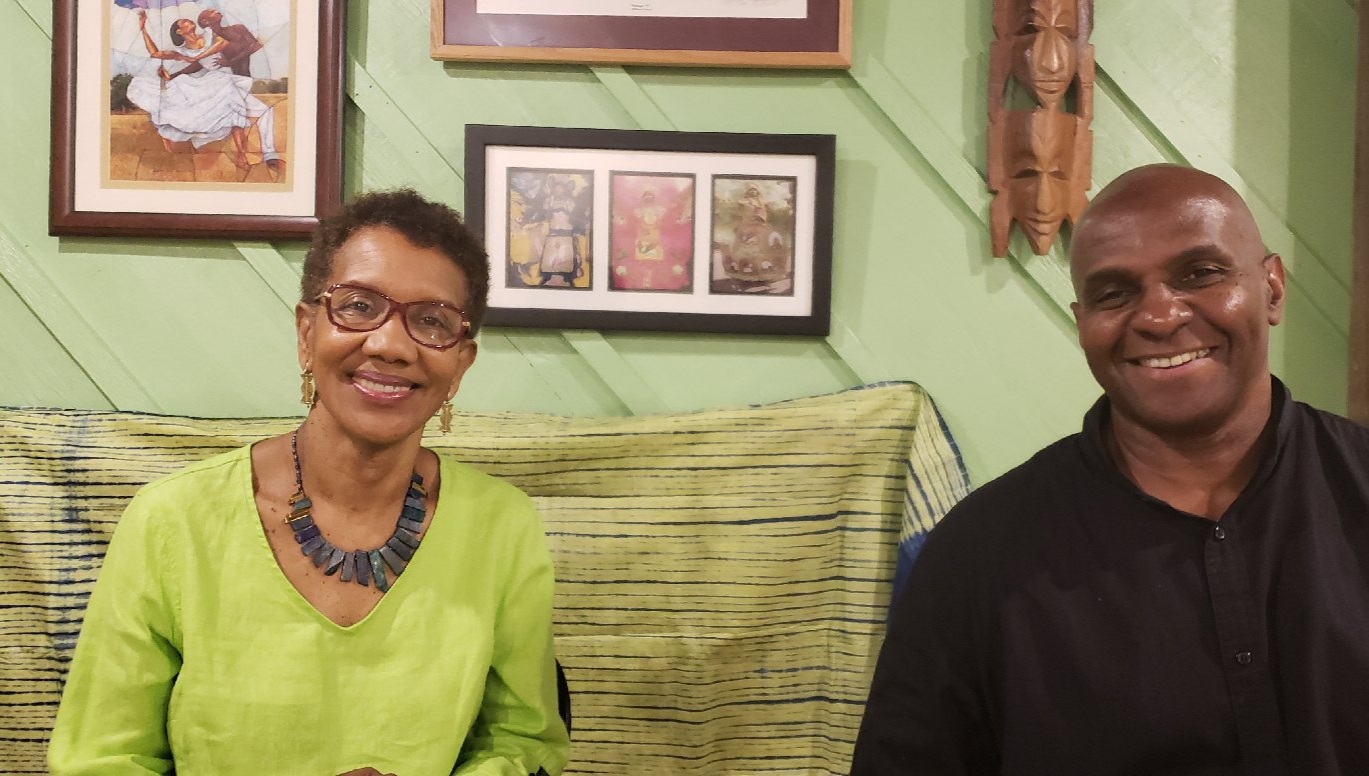
Dr Joyce Jackson and LD Azobra
Transcript for Interview with LSU Chair, Department of Geography and Anthropology Dr. Joyce Jackson
Good evening. Good evening. Good evening it’s 4 PM. Stand up It’s Count Time, time for every man and woman to stand up and be counted. Welcome to another edition of Count Time podcast. I am brother LD Azobra formerly named Lyman White. Thank you for joining us today.
Today we got a very special guest. A Beautiful. Awesome. Young lady who will bring a lot of knowledge, history and great information to you. I’ve been knowing her for quite some time. She’s a friend that I knew her wonderful husband Nash we got here on out is going to be one of our legendary segments called the living Legend’s she’s a legend amongst many of us here. We got here, Dr. Joyce Marie Jackson. Welcome.
Thank you. Thanks for having me on the program.
We, we excited about you about your history, uh, all the knowledge that you can bring forward. And I don’t even know where to get started at, but I know you, your history starts back at this big school and university. They call Southern Lab connected to Southern University. In the last couple of months. And that was a great honor that came to you. You was selected, elected not for no political office right? Probably requires being a little political. So she is the first of her gender to be the first female chair of our department at LSU. What is it?
Department of Geography and Anthropology?
What is that department? You know, we don’t, most people don’t know what y’all do over there.
Well, it’s in the complex, the geoscience complex in Russell and we’re a joint department of geography and anthropology. And of course geography is the study of so many aspects of land and anthropology So many aspects of humans. And there are certain sub-disciplines to each one. And in our department we have like I said, various sub-disciplines. And so it’s sort of a complex department because of that. And it’s because of the combination of the two disciplines, but it works well. This is a good marriage. So we have separate PhD programs and, you know, separate bachelor’s and master’s programs. So, we are separate in a way, but in another way, we are certainly close together. That’s the part about geography. We have a climate center, we have a regional climate center and the rec the climate center, and we have the state climatologists.
So that’s a big part of the department. Oh yes.
And, um, they get large grants. And so they, they are big in big impact, not only for our department, but for the college college, we’re in college of humanities and social sciences. So it’s, it’s a huge impact. And
It also studied hurricanes and those types of things too. Right.
Disaster science. Is under there? A sub-discipline
I know that’s not your department, but it’s interesting that most hurricanes come off the coast of Africa and you never hear a hurricane with African name.
because they name the hurricanes from here.
But they come off the coast of Africa. That’s interesting. [inaudible] give them hispanic names, german names that has kind of interested. How long has the department been on LSU campus? 93 years. 93 years. You are the first female. And I don’t like saying it, but they say women of color to be the chair of that department. That’s correct. And 93 years. So you saying that field was dominated by men for many years? Yes.
For many, many years. All of those years,
What is your, you also told me you was, how long have you been at LSU?
Well, it depends. You weren’t taking my years. Oh yeah. That’s interesting. Yeah. Um, yeah, I have two degrees from LSU. I’m a dual, uh, alumni. You might say I have a bachelor’s and a master’s from Elisha. And, um, so I took me six years. I had, uh, four years to get my bachelor’s two years for the master’s program and I was in music school. So yeah, I did I get from music, you, most people ask that question. How did you get from music to anthropology? Well, actually I went on Indiana university for my PhD and, um, I was able to, or an, a degree in folklore and EFL musicology. And of course, you know, we had an anthropology courses too. So a folklorist ethnomusicologist can also work in an anthropology department or music or English, you know, but I chose the cultural side and I do, um, you know, folklore and ethnomusicology. And I basically look at myself as a cultural ethnographer because we all have to do field work. It’s, that’s a major part of the discipline and anthropology. Um, geography, folklore, there’s some musicology, that’s a major part of what we do is feel
Work well, none of that is let’s talk about stuff we all connect together with. So you also, when you attended LSU, what year was that?
I started at LSU in 1968 as a freshmen, 64 Years after integration. And you grew up where’d you grow up? I grew up at the foot of Southern. You might as well say at the fiddle Southern university. I went to Southern university laboratory school and we lived right off the campus of probably a mile from the campus. So I, and my mother was an administrator professor and administrative of the university. So I grew up, I might say, on the campus of Southern university.
And so you went to Southern layout right there at Southern universities. You did not attend these Southern university? No, not the university there then,
Um, uh, lived on the campus because my mother was working there and I was interested in music and I was attending everything just about the music school had as far as performances, recitals, all sorts of concerts and everything. I knew a number of the professors. Um, I didn’t take, uh, I took piano with, uh, Mr. Davos, which was one of the major PN pianists, uh, at the university. And my sister studied with another professor there at the university. So, uh, Myrtle David. So we were just, you were there all the time. And I knew that music school side, I think I wanted just more of a challenge. And I certainly got, when I went down the street to Ellis, what
Do you mean you have more of a challenge? Well,
Doc at her desk
I mean, as far as the music school was concerned, there was more, they had more practice rooms, um, more band equipment, um, more technology. I mean, just everything that was more of at LSU than was at Southern. I didn’t know those professors of course, but, um, so I just wanted, that’s what kind of challenged, I just wanted more
Was part of the challenge.
Part of the challenge that I didn’t really think about a whole lot was going into a predominantly white situation where I just left the predominantly black situation. I mean, you know, it was there, but, you know, I didn’t really, um, I, you know, it, it wasn’t a barrier. I just decided to go for it. And that’s what I did. And, uh, it was rough. I’m not gonna say it was not an easy, I mean, you talking about the chilly climate, it wasn’t chilly. It was cold
All the time in the middle of stuff.
Yes, it was. But you know, you, you go through situations like that and you have things and, you know, we discuss it amongst ourselves. You, the, other of the, of the students of color that were at LSU, we lived on and on campus for all four years. And when I was, um, you know, working on my bachelor’s degree and there were incidents and we talked about them, you know, what each other, but, and maybe, maybe when our parents, but I even stopped talking about them to my parents, because they would think about taking me out and, you know, things like, you know, you walk into class and, you know, there’s a lot of students on the sidewalk and somebody just knock you off the sidewalk, you know, and you don’t know who it is because it’s, you know, it’s a group of people walk and you go through, even in the hallways, I remember an Allen hall, you know, the, the, the halls would be full when you’re changing classes and people would just hit you just do something and keep on walking. I mean, I had people I was spat on. Um, yeah. Okay. Well, yeah, so that happened. And I remember one day I was shot with a pistol water pistol. Uh, as I was walking along Highland road, uh, on the sidewalk, I’ll never forget. I was almost in front of the law school and, uh, they just drove back in the car and shot me with water, drove down, turned around, came back and did it again. So, you know, you go through things like that and, you know, it’s, there are small incidents to some people, but they tend to Mount up after a while
Said, well, you should have known that when you win the game, this is
Ridiculous. Yeah. Well, you know, I saw some of my classmates in high school actually go to some of the, uh, predominantly white high schools. Some came back because of the situation in some state, but, um, several of them came back to the lab school and they did it in high school. So I figured, well, you know, I’m in college now, you know, I have to kinda make it on my own, figure it out and go for
It. Yeah. Also you join LSU drill team.
Yes. Um, I had, uh, been very active at the lab school and in the different extracurricular activities, you know, I was in the choir, you know, that’s, L’s a thespian in the drama society and, you know, the various organizations. So when I went to LSU, I didn’t want to just go to class. I wanted to be involved in some type of extracurricular, you know, activity in an organization. So three, three of us decided we weren’t going along. We’ve had two of my buddies, you know? So it was three of us decided that yes, um, Loretta Verdo and rose Rochet, and we were pulled out yes. And rose. Um, Loretta Verdo was, uh, a classmate of mine at the lab school. And then we met rose when we got to LSU and we were all in the same dormitory and freshmen dorm. And so we all did, we were all very active, you know?
And so we don’t figure out something for us to do this outside of our classroom. I have no idea how we came up with the coed affiliate, Persian rifles, co-ed affiliate Persian rifles. We were the affiliate to the, we actually had real rifles. Then they did, you know, fancy drill with rifles where there was a girl team that did fancy drill too, would play rifles. Okay. Well, we had to dress out at all the home games in, you know, dressing up blue and white goods. That was, was military school. And so we, you know, learned all the aspects of being in the military, had to dress out for every game. And we decided, and that’s what we did. Don’t ask me why to call it a Philly person. Right. None of us can figure out, figure it
Out. We
Did it, we did it for a year going into the second year, but, uh, rose and Loretta left and went to sup well, yeah, because yeah, because of the environment, you know, it was, it was [inaudible] and yeah, it was in some of the classrooms, you know, we felt good and dorms and we could, you know, kind of lean on each other, but we all had this different disciplines. So we were all in classes by ourselves. And you know, some of the teachers were not fair, you know, different things happen. Like some of the things I just shared with you and they were happening with us as we were by ourselves, not ne not usually in a group. Cause when you’re by yourself, somebody could do something and just keep on going. And you don’t know who it is. You don’t even know who to report.
Well also when, uh, when you were with the Persia for rifle rifle, yeah.
Co-ed affiliate perimeters rivals. Yes. We traveled. I remember once we went to Alabama, you know, going with the guys, they did comp competitive drill and we’re just, you know, dude, I love fancy drill. We were in a really nodding com competition within and the other, uh, girl, real teams. But we would go with the guys and uh, you know, do our little drill. And I remember this, this, this one time we were going to through Alabama and they would stop. We went to the university station wagons
And they would stop. So everybody wrote in the station where he was, but he didn’t know bus.
Yeah. We, we were, we wrote in the station where I think they had the guys in the vans, but we wrote in the station waives the girl teams. So they were, uh, stopping at different points at different restaurants. And they said, oh, we go in there and to see how to menu is. And so we kind of looked at each other, see how the menu is, you know, maybe all those should go and look at the menu. So after the third time we figured out that they were stopping to see if they would serve blacks in the restaurants and particularly blacks with whites in the restaurant together. So
That’s, that was like the green book in another way. Yeah, yeah.
Yeah. Who did stay down a little while longer, but when, when Miranda, when Loretta Aaron Rose left, I left too. I just didn’t go back. But they left and went to Southern university, but you didn’t leave. I stayed.
You stayed in persevere persevere. And you graduated from such familiar as you.
And what happened at the graduation? Well, I had a bachelor’s in, uh, uh, musical performance, both a performance. And I decided to stay for the masters only because of Dr. Quarterly to Astra Cuneo. And she was my applied vocal music teacher. And she, you know, she was a minority too. She was from the Philippines. She used to push me. She was my driving horse. She was my mentor in the music school. And she pushed me hard. And you know, she would, she would, she would force me to, um, to, to, to audition for different things. And most of the time I wouldn’t get them, but you know, sometimes I did, when I got to the master’s level, I did get a couple of performance, you know, solo performances and some of the things. But, um, she was the one that pushed me and pushed me and she would even talk to my parents, you know, she would call my parents. She says, she’s done. No, don’t, don’t, don’t encourage her to leave. We want to hear, you know, she, she kept me there. That was the only because of her that I stayed for my master’s degree.
[inaudible]
Yeah, they were long gone. They left, went to Southern. Did quite well at Southern university.
No, I haven’t been rules was a desk and all this other opportunity would have never happened. Not at that particular time have charter sorority. Which one is that?
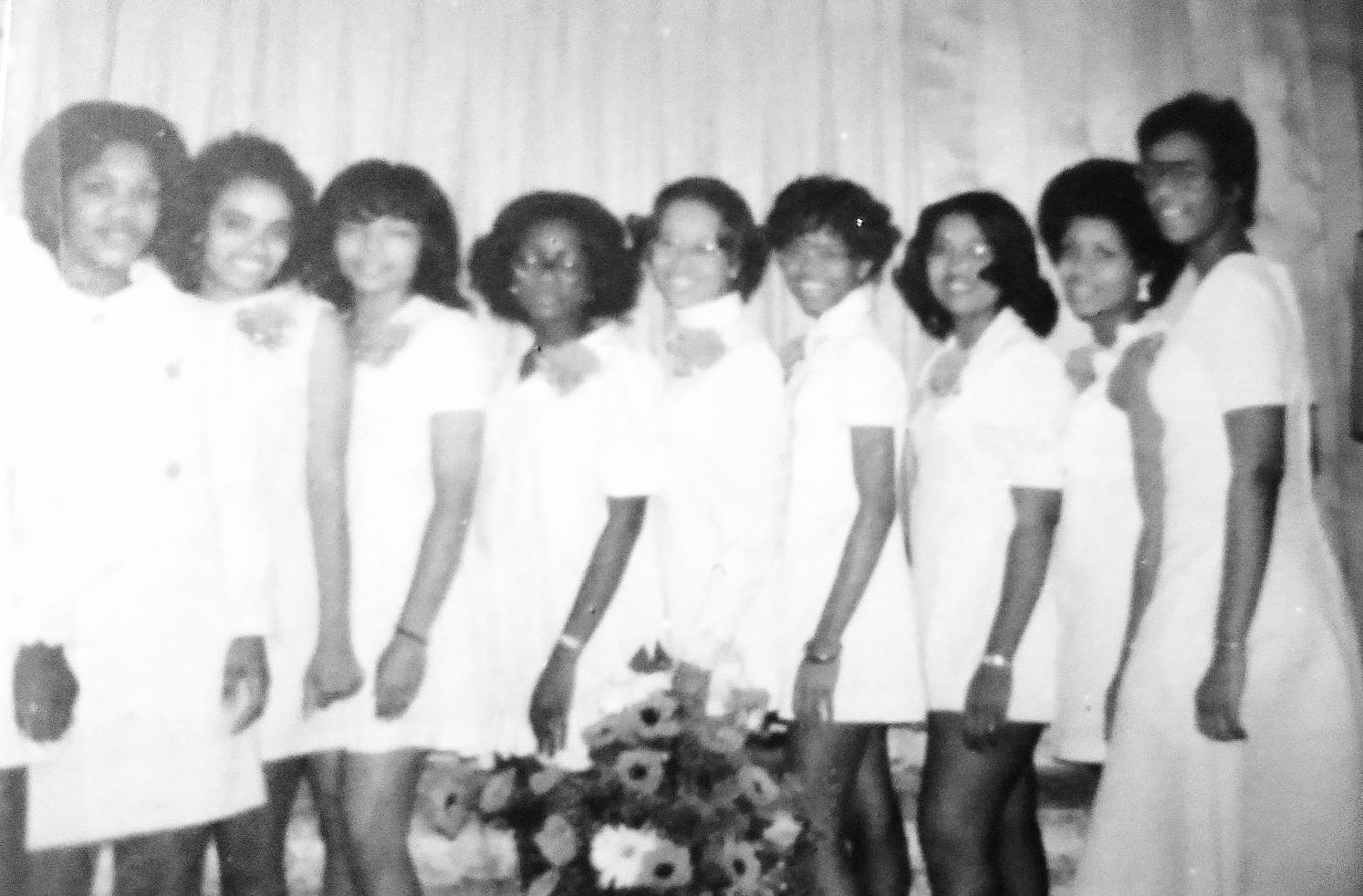
Oh yeah. Um, I’m a charter member of Delta Sigma theta at LSU. We were the first, uh, black sorority on the campus. We chartered it in 1972 out of data
[inaudible]
You had to have nine to charter. And I asked me all the names we had nine y’all have y’all started, uh, is iota data, chapter Delta Sigma data incorporated. And it was a two alumni chapters that charter the chapter at LSU. So you have the bandwidth deltas and the bandwidth sigmas charter the chapter at LSU.
And you also are the link. Yes. Lynx incorporated. Well,
The lease is another organization service organization of a women of African descent. And we have 16,000 members. It’s an international organization because there are chapters in Jamaica, uh, Liberia and London. So it’s an international organization to
Work directly with them.
Yeah. We have a chapter. We have two chapters here. Uh, my chapter is bandwidth chapter and Baton Rouge chapter, the links incorporated. And then we have the black cap, a towel chapter of the links incorporated. They are the youngest chapter. We were the oldest and we have a, yeah. So it was about 16,000 women. Yeah, I am Rotarian. No, no. I’m secretary of the, uh, uh, the capital city rotary club. Well, you know, I always wanted to do service to my community and I figured the best way to do it is to be launched the organizations that you can get more, it’s more impactful if you do it that way. You know? And so I, I knew about the deltas in high school. I was a Dale Sprite and, um, I would go on the campus again. So on university campus, and these are the sororities and fraternities I would see. And I had deltas that I knew personally. So of course they would always talk to me about the Delta, but I, when I went to LSU, I, we didn’t have any, so what’d you do, if you don’t have it, you try to start it. Right. So a group of us got together and we decided that we wanted to be deltas. And so we started talking to the alumni chapters and to see what to do
In 1970, in 1972,
We charted out a data chapter,
But do you end up renting it from LSU? What was your next adventure?
Uh, I, you know, I did the masters there too in vocal performance and vocal.
Oh, you did the masters right behind it. Yes.
I just started to stayed on because that, you know, I had that professor that was pushing me, that’s the core belief to Esther KVO. She was still there. And, uh, she, uh, encouraged me to stay on for the master’s degree and, and, you know, continue to work with her in vocal performance.
And so she was in your car. So you ended up getting in a bachelor and masters back to back at LSU. That was a major accomplishment, particularly there, hang in there that long I was
Hanging in there. Well, you know, it, I think along with her, which was, she’s a very, you know, just an extraordinary woman, but it was my family, too. My parents, they were, I used to call them my bookends, you know, because, you know, they supported me. They really supported me in everything with the all app performances, whether add a solo part of that, they were, they, you know, they were there because my, my, uh, dad, uh, you know, my mother, you know, my mother has three degrees from Southern and my, my dad was a laborer at Exxon. And was it so standard art when he started. And of course now is Exxon standard all company. And he was a laborer. He only made it to the 10th grade in high school. And he, um, you know, attain of your high school in Zachary. But he, he was so determined to get his high school diploma that even after working at the plant, he went to night school. So he would finish, um, his, you know, so you get his high school diploma. He went to night school. I remember that. Uh, and, uh, and he always told me, he said, baby, you say, you go go. As far as you can go. And dad is going to help you. He said, I want you to go much more than an idea. And so that’s what he did.
And you name, it was also Mason. Yes.
He was in the Masonic order. Yeah. So several oh, he was in Schreiner is in the consistory. He was a 33rd degree, Mason.
Yeah.
Very important in our family masons and Eastern star,
But you didn’t follow the dose. No,
I, I was in the youth fraternity, but I didn’t go any further than that. I mean, it was just, you know, I was, I had to go to everything with it, everything that your children could go to.
Now, you ended up after your master’s degree, what was your head where you end up in your doctorate,
Indiana university in Bloomington, Indiana.
[inaudible] well,
Um, Dr. Raff Appleman who’s over the vocal music research department at Bloomington came to LSU to do a sort of like, uh, artists and resident for a little, for a little while at LSU. And so he did a workshop and he wanted to use [inaudible] students. And so he wanted to use me for one of his demonstrators. And so after he used me for a demonstrator, he say, when you finish here, you need to come then. Yeah. What I’m thinking and yeah, I’ll go to India. And of course, Dr. Helio, um, encouraged me to go to, she sees continuing voice. That’s the best place you can go to. And it really was. And Deanna has a school. The music school consisted of about 3000 students in the music school, alone, all bags. So, you know, some HBCU don’t have 3000 students in it, but, uh, it was, uh, it was, uh, it was a great experience is one of the best music schools in the country.
You know, when a lot of the, the performance at the met finish say, go to Indiana to teach. And after they retire from the stage, they go to Indiana university to, I was really honored, you know, for him to, to, uh, invite me. I didn’t want another, I didn’t want a PhD. I didn’t want another degree. I just wanted to go for further study. No, I wasn’t looking to get another degree in music, another PhD at, oh, I just wanted to sing the same saying it. No problem. So I went to, um, work with him and, uh, yeah. You know, he was, I mean, an excellent vocal pedagogy in vocal pedagogy, in vocal music. And, uh, he was still singing an opera himself and, and doctor that the apple one was probably in his seventies at that time, but he performed until he was wearing his eighties.
So what, what are, what are some new, what was the exciting part about going to Bloomington Indiana? What did you like about the university? What groups mixed up?
You know, when I was thinking about going, cause they had invited me, but you know, I was thinking about, and so of course I looked it up to see what else they had to offer. And I go down, you know, take a few classes, apply vocal music and you know, this is whatever else I wanted to take, you know, checked out to see what else do they have. And I saw they have a black music center music, a black had a black music research center. And, um, so that definitely piqued my interest because at LSU I didn’t do probably in the black music. I, I asked my professor if I could do something on my recitals, you know, I had a bachelor’s recital and I had a master’s recital. So I w you know, mom, you made me do a spiritual or two, but I really started looking at black composers and I wanted to perform some of their works. So I thought, wow, black music center that really intrigued me. So I started checking into that and to see whatever, what else they offer, you know, as far as black music was concerned. Well, so not only that, but they had a black studies program and they had an African studies program. The black music sends in a black art Institute. All of this was at Indiana university.
Yeah. Well, late seventies, early eighties. Yeah. In 94, we have a, um, you know, we got the black, but the
Actual department, they just got that last year. LSU.
Yes. We had a program. We had a, uh, program and the other head of department of African-American studies. They had a full department of African studies and African American arts Institute and a black cultural center. All of that was in Indiana when I got there. And that was late seventies
And it was full
Palace, like seven habit. [inaudible] very excited because I’ve
Seen people like you that’s made it more exciting, or just because you can learn more about your culture. I had
Never had a black professor, never in a university system. So I had a couple of black professors. Most of them were black as a matter of fact, when I, cause I did a ma I did well later on when I decided to go for a PhD, I did the African-American studies minor. And, uh, I did, you know, instructional systems technology. And then I did an African mine. I didn’t actually officially do that. I did the coursework, but I don’t know, officially apply for the African studies minor, but it was just so, I mean, I had three minors.
You got that excited. I guess you feel deprived at LSU.
I felt depressed because I didn’t have anything. Um, you know, anything along in terms of black studies. And it was few when I was there. No black studies, no black professors, none of that, the geography and anthropology department. How many of y’all, how many,
I’m the only black professor? How many of us even entertain getting to get going into, into that politics?
Well, that, um, that’s another situation because, um, a lot of students, you certainly don’t hear about this in high school. Now I have this taken on my own to go into some of the schools that have predominantly black students, uh, to introduce them to anthropology, folklore ethnomusicology deals, where we can study ourselves. And, you know, because at one time, even these fields, you didn’t study yourself, you studied the other comparative studies, you compare it basically compared it with European culture and say, and or whatever you don’t, you don’t do your own. You don’t study your own self that you can’t be objective enough. So you have to study the other. And that’s the only anthropology was for a long time. We just, you know, um, folklore to, you know, at least disciplines, they were comparative. We had comparative musicology where you compare again, European music with indigenous music or whatever else. The F you know, the folk music is of that country. Now you can study European music in ethnomusicology. Now you can study any music of the world that you want to study in as in the field of ethnomusicology, but you couldn’t do that 60, 70 years ago,
Tight, tight hair, what you can do and how
You can do. And so here I am an Indiana university. You mean, I can start my whole mouth. I was elated, and I know you can do that, but here’s, I’m at this place now that I can actually do this
Loud to really drive
And in my own working with my own culture, music, folklore. Oh. And I, you know, things come up in the folklore class, I say, slander dozens, dueling, verbal duel, laying on the streets and toasting the toast tradition. [inaudible], it’s like learning something new,
Wonderful, awesome experience at the university of Indiana, Indiana university, university in Bloomington, Indiana, south at LSU. So you had that great of a time. What brought you back here?
Well, I have the wildlife, you know, my professors, my professors file it, you know, was telling me why don’t you just go on and apply for the degree? Cause I was just taking courses. So I went on and applied for the PhD in, uh, and I decided to go the folklore and ethnomusicology route instead of, you know, like anthropology or music. I didn’t want another degree in music. And, uh, I felt more at home in folklore and ethnomusicology and so joint degree again in folklore and ethnomusicology and um, so I finished the PhD there. Um, but before I finished, I was working on my dissertation and trying to work, finish up a dissertation, working two or three little jobs, you know? Well, I, I came back home to new Orleans to work, do my field work for the dissertation, which is a major thing we have to do as a field work.
And I was, I decided to do mine in gospel music. Well, initially I wanted to go to Africa and study the Sujata epic in Mali. So I took two years of bombard preparing to go to Mali, but I never did get the money. I never did get the fellowship to go. So I said, at what else can I do that really interests me and study of gospel music. Um, my parents, my father had a singing group in his family, the Jacksons and they, you know, perform gospel music. And then I used to hear quartets and all that. And I said, well, I think I’ll do something where we have a void. And there was a void in quartets, you know, in the study of quartets. So that’s what I chose to do. So I moved back to new Orleans to do the field work for my dissertation.
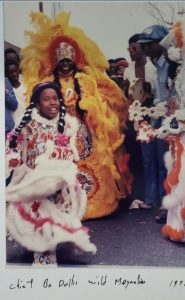
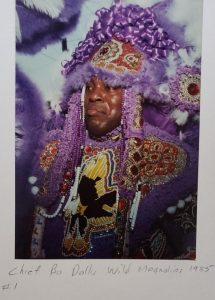
Chief Bo Dollis, Wild Magnolias
And after I did a lot of field work there, I stayed there for a year. It was kind of like a little group here. I follow quartets around gospel quartets and interview them, you know, and observe them in the context of, um, you know, in the contextual setting of the churches of whatever community centers it was singing in. So I studied that for a year, just going around new Orleans and doing that. I did once move in Baton Rouge that I grew up hearing. And so I included them, um, you know, talk to some of my travelers, Zion travel, spiritual singers, uh, work with them. And Ben ruins, Zion harmonizes in new Orleans.
Now you told me that when you attended LSU, they told you to get to that the same.
Yeah. Uh, it’s not the same gospel music. They thought that gospel music would destroy my voice.
That’s where your boys come from. They literally told you that the same. So you couldn’t say in gospel music, why use it attended LSU?
I, I was in my church choir. I got out of the choir. I got out of my church choir. No I did
Because you thought professors knew better. We know gospel music moves the whole world, even government yet with a couple of weeks ago, had a gospel, uh, monazite gospel choir and his demand is going up and going away going home. And so gospel is a big thing in our community, but he told you not that you could not say it or not to stay.
Yeah. She encouraged me to get out of my church choir and stop singing gospel music because at the time they thought gospel music would destroy the Volvo cars, not destroyed, but you know, give you bad. Um, you know, a bad technique. Cause you had a certain technique that you use when you were singing classical. So you tell me you lost your soul. Well, you know, I must say it wasn’t this LSU. It was that some of the HBC use to, if you were in the music school at Southern university. Cause I know I used to go up there all the time and down, you know, in the hallways and Southern university, they did not want you to play or sing gospel music or blues and rhythm and blues. Jazz was fine and classical music, but they would take you out of the class, put you out of the practice room. If you practice gospel music of blues, it was at Southern kept you with your culture. Yeah. Many of you started in classical music. That’s basically all they wanted to study.
Now let’s fast forward. So I had to end up back at LSU,
You know, after I did my field work in new Orleans, uh, I had another year I’d needed to write then, you know, get all these interviews, all these observations, videotapes, you know, I’ve been collecting this all all year and I had to write it up now. So I went home to stay with my parents. That’s the only place I could stay for free. You know, it just right, because everywhere else I had to keep a job and do all this. I had three jobs as I was doing my field work. I was subbing as a schools. I, uh, I, uh, pay my real estate. So I was working in real estate. I’m working at Tulane university, jazz archives. So the pay, my bills, I had to make it work. So you came back. So I came back to my parents’ house to write perfectly fine with them.
They wanted me to finish too. Uh, so I, I just, and while I was writing, I started applying for jobs. I applied to different universities and I even applied to Southern university, but they didn’t need or want an ethnomusicologist at the time. So I applied to LSU, they had an opening in the geography and anthropology department. They were looking for a folklorist because they only had one person teaching the folklore classes. And, um, you know, he’s a full sort of like a folklore as anthropologist. You know, he wanted to teach some more he’s in vernacular architecture was his specialization. So he wanted to, you know, do that more. And they wanted to have folklorist to take on the folklore courses where I applied for the job, did the, uh, uh, interviewing and you always have to do a public presentation. I got the job, 86, no, 87. It was in the spring of 87 LSU for 30, 34 years or four years. So
You, you went there too, you got two degrees with it and left there and we got a PhD in India then came back and been working in LSU.
Yeah. When I got the job. Yeah. I mean, I had a time in that period of time, I went to Washington DC. Um, I received a fellowship at the national endowment for the arts. So I worked there for about six months. It was an internship sort of fellowship to learn, um, cultural development management. And so I was there and actually I was still writing on my dissertation. It was stolen. Everything was stolen when I drove in from, from to end to Washington DC, it was stolen. So that delayed that degree another year. So now my car, I mean the hard copy the disc at that time, we had the flap. It is sort of flap. It is all of our copies
That must of cost medic experience. Yeah.
It was traumatic to see all that work, you know, you know, I had to sort of recreate a lot of it.
So all that would just go, there was no other copy. Yeah.
Because I ha you know, at that time, you know, you’re just not thinking I had my copies. And what would you, my professor, my main, uh, committee chair at Indiana had a, uh, a few of the, um, chapters, but some that, you know, that had, you know, really revised, but he sent me what he had and I had to work from that. Cause I was supposed to graduate that may, you know, finish writing. Cause I had, you know, did a lot of work at home and I was going to finish writing and graduate in may. Well that prolonged.
Now did you go to be the chair of the department of anthropology?
Oh no, that was nowhere on my screen. So,
So you, you never even, okay. You been working here for 34 years and you in another 34 years, do I to be the chair one day? Well, why it never crossed your mind?
It just never crossed my mind. Um, you look at the culture of the department, uh, you look at how it’s been status quo and it was just move. And basically I was into my research and my classes and my students and doing my research. I hadn’t even thought about being chair and even had a woman chair all those years, you know? So I hadn’t even thought about being too working with my, my, my students,
You going to say yourself, and one day we’ll have a changed it or they need to do something about this, then they will cry. So when you became chair this year, how did, how did that come about? Can you share how, you know,
I was getting a little frustrated and disgusted about some of the things that were going on in the department when we were trying to make diversity hires, you know, I just made some statements in the faculty meeting and, you know, I said, you know, this just has to change. You know, we got to do better than this. And I said, um, we have an opportunity to have this diversity hire. We had four candidates in to a more black, uh, male and a female would have, they were black and two white females. You know, we were going back and forth having deliberations about whom to vote for and what they would bring to the department and you know, what this looks like and what they would do for the students and all of this. And, you know, they were going back and forth. And I thought some of some people were just being a little bit nitpicky.
So I’ve made a statement in faculty meeting that, Hey, this is, this is really needs to stop. Um, we need to move forward and do this diversity hire. And I just thought gave a brief history of me being there for 34 years. And there are some there that have been there longer than I have been. Um, but I just reminded some of them about what had gone on in that department for the last 34 years, we had had two other black professors, one passed, he died a few years after he was hired. And then another one only stayed. It was another male. He only stayed a few years and he got a bit off another university and he left. So I just basically talked about how I was treating when I first came in, how some people just didn’t even know how to talk to me.
I was a black woman, um, born and raised in the south, grew up during the civil rights era. And, uh, the other guy that left actually was, uh, from Belgium and his father was Belgium. His mother was from Sierra Leone, west Africa. And I even told him that they looked at him as the exotic other, they embraced him much more than they embraced me as a black woman from the south. And, um, but when he was, you know, he spoke four or five different languages, he had a very strong French accent. He was definitely, you know, black, you could see he was, you know, of color, but, uh, they were more comfortable with him and they were with me. Cause you knew more about the history too. I knew about history. I knew. Yeah. And I could really talk about the life I’ve had at LSU since the student, you know, you don’t need anybody to tell me, I have experientials and historical knowledge.
I know how I was at LSU in 1968 and I had to talk to him and his name was John. Right. I have to talk to him about it. Cause he, you know, he hadn’t experienced, you had to bring him up to speed. Yeah. We, you know, we talked, we had conversation, he really looked at me as kind of like his mentor because he was learning a lot about us, you know, history, the Southern history, you know, and, um, you know, discrimination and stuff. And when he was discriminated on or when he was targeted at LSU, you know, he was so appalled. He didn’t know. So I had to explain to him as this is what’s happening, you are black, you don’t look on as black, but some other people outside of this department, you know, doing this, uh, African studies is the African film festival festival.
We were doing it together, written the grant and gotten the funding to bring in the films and then have panel discussions after the films. And, uh, he was, uh, so struck when somebody wrote across the, the, we have this big poster and he had a poster on his door of his office and it said, go back to Africa, across the poster. And he was just upset. He took it to the chair, he took it to the Dean and it, you know, I w I wasn’t surprised. So I had to talk to him and, and we had good conversations about that and why that happened to him. That was an awakening for him. It really was because he had been in the U S but he had a, was in San Francisco for a while. I think he was a postdoc. He was in San Francisco for something for about a year or so before he, uh, got the job at LSU. And, uh, but he had really, hadn’t, you know, hadn’t experienced a lot of discrimination, so, or, you know, be targeted like that. And he really, he was truly, so then he really wants to, so we talked a lot about it. No.
So when I’m doing the game he got out, he sure did. But also I, you know, being at LSU afforded you opportunities to do a lot of traveling. I know you do a lot of research and study abroad in some of your favorite places. Yeah. I
I’ve been drawn to the Afro based, um, French Afro French countries like Senegal and Haiti. And I guess because, um, well, I, I know I first went to synagogue, became interested in synagogue after reading Quinland middle Hall’s book on Africanisms in colonial Louisiana. And she talked about the fact that the Senegalese were one of the first ethnic groups to come in to new Orleans or to Louisiana theory, insulate people. Yes. And this, you know, early 17 hundreds. And she talked about the fact that about 12, 13 ships came in and 11 of them came directly from Senegal. So that really intrigued me because I always thought my grandmother looked like a tall Senegalese woman. And I don’t know, I don’t know, you know, where my ancestors were, what ethnic group we came from, but I like to, you know, claims yeah.
Then you visit there quite a few times. Oh
Yeah. I’ve been there a number of times. Um, first actually joined with my husband. He was, uh, friends with some of them, the Senegalese ambassadors that came into DC and he used to shoot the photography for them. So first I went with him and then next, um, I wanted to go back and do some study in there. I didn’t, wasn’t quite sure what I wanted to do. I just knew I wanted to be in the Senegambia area because they were, the groups at first came here from, from, from west Africa. So I had, uh, one of the doctors that, um, Morehouse, he asked me if I would interview one of the healers that they were bringing the healer to the Morehouse medical school, because they, they had a, uh, uh, an Institute on traditional healing practices. And so they will bring this healer from Senegal.
So he asked me, he gave me the interest. He didn’t give introduction, she didn’t give interviews anymore. So he gave me a letter to give her as an introductory letter. And so from him, his doctor, Dr. Fitch and Morehead, Morehouse college. And so he wanted Nash to take the pictures and he wanted me to interview her. That’s how I started. I interviewed this. She was 106 years old when we got there. And, um, I had to get special permission to she’s a legend is very important in the country. And so I had the permission and introduction to her to go in and interview,
You say that he’ll explain
Traditional healer. Um, and that really moved me into studying rituals. I already sort of lifted rituals, but looking at rituals in Africa and the diaspora, and this was one of the ones that I looked at, what traditional healing practices. I had an uncle that ask me, well, what, what do you do when, you know, when you go to, we work with, I say, I work with these traditional healers. I had to explain to him how he is his mother and my grandmother used to, you know, some of the things that she used to do for traditional healing practices. She knew some herbs and things you can, you know, put on a soar to help it heal something that you take internally, you know, those bad stomach aches, something you do for a coal. And she, she used herbs things that she having a garden or some tree she would get off of it. And so a lot of things she did, we didn’t know what tree or what plant she was getting it from. But you know, they, in a lot of our elders, especially in the south work with these traditional healing practices, because they didn’t have the money to go to physicians. And, um, so they learned a lot of these news passed down through the generations.
In fact, when I was a boy, my grandparents stigma on my dad’s side, my grandmother, if somebody had any kind of here, but she just didn’t go to yoga, pull list, plan, or flour, because back then nobody cut grass. Like they do [inaudible] yard, whatever group they would let it grow. Natural was you tell us, go pick up pixels type of tea leaves, you know, for certain purposes and whatever him and you had. That’s just going to the doctor that wasn’t even thought you could, like you said, you call them healers doctors call it practices, physicians you’re practicing.
You’re right. They were healing. Uh, and so that’s what I was looking at. This was one of the healers in Senegal that was highly respected. I mean, people came in from Europe so that she could work with them. And of course the Senegalese, how they respected her. Now you have to realize this is a 90% Muslim country at some point in time, you know, women were not as respected or as you know, but now in contemporary times, you know, you have women that a business business women and, and, uh, and politics and all of this where a healer, you know, they, they don’t look at ritual as such in, in this traditional healing. This practice was passed down through generations, by women, in the neighbor, ethnic group, in Senegal, there around fishing villages, to Dallow those villages and there around the edges, you know, of the ocean fishing villages.
And these women are very powerful healers in that particular country, in the Muslim country. You know, you in an early age, you know, we way back, you know, when this particular healer here, she’s mum five to sec was her name she’s a hundred, six years old. Was she learned it from her mother and now she’s passing it down to a hundred, you know? So it comes through the women to lineage. You know, as I saw myself how powerful she was when, you know, some of the politicians will come and ask them if they would come to their, you know, like a political rally. Cause they have, the healers showed up depending on which one it was, that means that person is highly respected. And I mean that political person, if this healer shows up to your rally, that means you, okay. You know, you, you sanctioned by the healer.
So that’s how powerful she works. I went to one interview and they were getting ready. And so I’m, you know, I’m, I’m curious. And so what, what what’s going on. So she has an entourage of her entourage head on their regalia, all this serious colorful regalia. So you got about 10, 12 women all dressed in these beautiful colors, the same dressing. And then you got the healer there and they had to care of her. Cause she, you know, she didn’t walk very well anymore. It’s just a magnificent view to see that, you know, this is powerful weapon coming through. He is a Muslim country. You know, they respected her and most healers are respected. Even the athletes respect them that I noticed that I went to some wrestling matches while I was there, simply because it was a connection with the healer and to download this law village, I was able to go to the wrestling match. Then I was able to interview the, the, the wrestler, um, before and after. And he had his own healer there with him. He, she would, you know, put some portions and in his belt or wear around his neck. And, um, then he had this, um, this liquid that he would pour over him and that’s that’s to help him with his power. And they wouldn’t do anything without their healer, man.
Well, yeah. And that’s basically what comes from African tradition. And th th so I was in it, and then I went to the national stadium where the, the big wrestlers wrestle, it’s a whole performance, you know, you have the healer there and that you have entourage and they do their dancing and stuff. And then you got the dramas over here. It was like, [inaudible] got a great performance. Even with the basketball games, you know, it’s stuff that they have part part of the band there, and then the cheerleaders and all that. So, but instead of the healers and their entourage and, you know, their dramas, they got their master dramas with them. So you’ve got all this going on in a wrestling match. [inaudible] right. And then, you know, and you see him, the wrestlers go over and they work their healers, they do their thing. This, this is a whole ritual. And it’s amazing. It’s powerful
Is a big thing in African country. Oh yeah,
Of course we know soccer, but wrestling is the other thing that’s really, you know, they’re football and soccer, but wrestling is the other thing is serious. It’s very serious to have your own healer. She got to be, she got to have your healer there. Yes. The national stadium, I went to wrestling matches there in, in one, in a small village. And then I had the, you know, I was falling in the wrestling. I wanted to see what the hell is happening. That interaction between the wrestler and the healer, that dialogue that they were having between them. It was powerful. I don’t know what all of a sudden, the little day that they were in the liquid, that they pour over them. So they didn’t just do, like, they don’t work.
He has to lose, but, you know, it’s, it depends on who has the most powerful healer how’d you end up in Haiti. Haiti was another country that I had an interest in for a long time, again, because of the, the, um, the influence of Haitian culture on Louisiana culture. And I’ve always wanted to go to Haywood. I, I did a project with the metals museum in north Louisiana, um, with Dr. Bria who was a Haitian, uh, collector. He was a physician, but he was a collective Haitian art. And, um, when they asked me to work with that museum and they wanted me to do a presentation on Haitian culture, I said, well, it’s good to do a historical presentation, but we need to know what Haitians are doing that in Louisiana today, because they, they doubled the population of Louisiana after the Haitian revolution. So I said, so we still have so much Haitian influence here and the culture and the language in the food.
So let’s find out what’s going on today. And so I, you know, so they did that. They, they gave me money to go out and interview the Haitians that were in new Orleans and in Shreveport because the exhibit was in Shreveport. So that’s how I started getting into the Haitian community by going into, um, into new Orleans and doing interviews there. And I interviewed all the Haitians that when Shreveport at the time, which was 12, Dr. Bria was one. And he took me around to all these Haitians, to their homes. So I can end up getting him. Cause I was looking really at what were the things that they had maintained of their culture after coming to Louisiana. I mean, these, you know, contemporary Haitians, so to speak. So I wanted to know what major, um, things that they were still doing to maintain their Haitian culture. You know, I knew that was important to them. So, um, and so it was a very, um, enlightening ex exercise that I did. And, you know, I learned a lot about Haitian culture through talking to the people.
Are you saying that then the new Orleans doubled in population? When
Was this after the Haitian revolution, after the Tucson overture, the Haitian revolution over in 18 0 3, 18 0 4. Of course there were mass migrations before the revolution was over because the planters were leaving, going to Louisiana, Cuba, wherever else they could go. But of course they were taking the insulated people with them.
So they came. So the Haitian, the new Orleans population grew overnight because of the migration migration of Haitians coming to new Orleans in 18 hundreds. But they came, we came, came back to the way of, uh, the slave masters broadly.
Yeah. The slave masters brought, yeah, they’re, they’re enslaved people, but there were also free people of color that came. So it wasn’t just enslaved people, but the free people of color also came and that brought new Orleans into a three tiered society that the white, the Creoles and the enslaved, the Creoles and free people of color with all free people of color are not considered Creoles. And, but so they had, but they basically had the three tiers to society.
Since I got an anthropologist in, that’s always been the big question. Well, what is a Creole?
You know, it depends on the time of history that you’re talking about. Some in one time they considered Creoles to be people of another descent. I was born in Louisiana. So like, if you’re European and your parents came to Louisiana and you were born in Louisiana, then you were creed up. And then other people say, well, you know, another definition of course is when you have the mixture of, uh, black and French or black and indigenous people, they’re considered like Creoles too, you know, a black and you know, some Spanish, French, whatever,
Ed, the Jordan Smith, uh, one of the renowned geologists around the Louisiana area said that also Creole was a term like, like you just defined. She said for when the Africans came to this country, but when the child was born here, it was considered a career. Yeah. And as my own, my first time here, you know, we grew up pretty. I had to do with the complexion of your skin. You would like a flexor. He was considered a Creole. But I knew when I grew up that wasn’t true because there was people, Creole that we called cochlear, and it was a different, you know, a dark to light. But I put for the most part that need like light skin for the, for these days at time, they use it more for the lighter complexity.
Yeah. For mix, because you have, you know, mixed blood, which, which are not light, some are dark and they’re still considered Creoles. So it depends on, you know, who you mix with.
What kind of work were you doing in Haiti?
Well, um, I was actually, uh, first started going in, looking at carnival because I also do carnival in new Orleans, Mardi Gras, Indians. Okay. So you’re going to get that your favorite subject. But I went there because I was always interested in, um, the indigenous population and how they are represented in carnival. And there are Haitians who also honor their indigenous populations to Arawak Indians, you know? Um, and so they dress like they’re awake in the ENS in, in carnival. And it’s a lot of bands events. So-so
Haitians in Haiti have a Mardi
Gras. Kitchen. Yeah, yeah. What they call it carnival. And they have to, as a matter of fact, they have one and of course the main they call it the national carnival and port us for Spain. Uh, I mean, Port-au-Prince Trinidad. I do Trinidad too, but the other one is Jack male. They have a traditional carnival and Jack mail. It happens the week before the national karma. So I went to the national carnival first and this was right after the earthquake. So they were moving it around. They didn’t have an input. They, they moved it around to a cap patient, which is in the Northern part of Haiti because they wanted to take it to different cities. So they could bring revenue to those cities because, you know, if you have carnival people coming from, you know, full all of the countries, they comment to Haiti. It’s like they come and Trinidad the new Orleans, you know, with the Caribbean folk.
Yeah. So are you telling me that even in Brazil, so mighta Gras, carnival is a part of the culture of who would be
Many countries have carnival, um, yeah. Brazil, uh, Haiti, Trinidad, uh, a number of other countries, you know, some of the other, some of the other, they may call it something different. Like in Jamaica they had Junkanoo.
Okay. But I’m saying that, you know, for the most part we Louisiana with European, I mean, you got was a European type of thing. Well,
It was basically started in Europe. Yeah. And we know when we had the diaspora began with, uh, all of the, uh, uh, people of African descent, they had carnival wherever they were, you know, so this is now it’s in these countries is a mixture of the culture of that country as well as European culture. So you have these cultures mixing up for a carnival monocrop. Now in some areas like new Orleans, they have, you know, the big float parades, which is basically kind of like the European side of it. But in the black communities, they walk the streets and it’s sorts of different type of carnival. As a matter of fact, they didn’t even call it Mardi Gras, they call it kind of up, you know? So you have those influences from Haiti because the Haitians came into new Orleans. And so you have these mixtures. I look at like you take the modern grain is for instance, a walking, uh, carnival walking in the streets, parading through the streets during precessions. And there are a combination of west African influence, Caribbean influence and indigenous influence. So, and because it’s on my grind day, a lot of people say in European influence because it’s during that time. But you know, it’s those a combination of cultures that are coming together,
But the Indians just don’t come out on Mardi Gras day. They got something they call super Saturday. Yeah. They
Will. Even before super Sunday, they do St. Joseph’s day. And I can’t, you know, I’m still, I still ask why St. Joseph’s day. Well, you know, there’s a lot of Catholics in new Orleans. It was the highest Catholic population of blacks. So another day to day come on, they wanted it. That was a traditional one carnival and St. Joseph’s state is just another day to celebrate another day. We can wear our, since the super Sunday started because of the protests, uh, with, um, Jerome Smith and tambourine and fan club, basically the youth of the community and tree me. And he started super Sunday. But looking at it as a way to protest destruction of many of the black homes in the treatment area, when they brought, when they destroyed Cleveland avenue, they still destroyed all the trees. It was kind of like a Parkway. And it was, it was, um, lined with Oak trees and grass where the community would congregate for different things, all sorts of community activities. Well, when they destroyed that and pulled in the interstate, they destroyed a lot of them
Ran the interstate drinks straight through as user would stay straight through the
Community, right through the community, the store at the park area and the home many homes and black businesses,
Cleveland avenue, Clayborne avenue, it goes down to cross as the city. Yeah. So now tell them what was super Sunday, what happened?
Well, what happened? He was, it was a sort of a protest March marching, you know, because of the urban, urban renewal.
So, so, but not end up being a party.
Yeah. Yeah. Well, it started as a problem in the story that I get from several people that 2d chief, big chief Tootie, Montana, you know, new Jerome and they used to talk and he knew that Jerome was having this protest March, you know, to speak about what had been done to the community. And so he decided that he was gonna March to, he ain’t gone Jonah, but he joined them in his Indian suit. So of course, when people see big chiefs 2d out there in his Indian suit, they start dancing. Some of were put on that very big T 2d. I hear serious. So they say, okay, we go join them too. And that started the first, super Sunday in the downtown area around tree. May you have Orleans avenue dreamy? That’s that, that’s that area by the municipal auditorium congos and that bar from Congo square and all of that, that’s, that’s the tree main area.
And that’s where the first hoop was done suddenly started. And then the uptown, the doubt that was downtown for the uptown folks to say, well, we going to have a suicide. So then the uptown decided that they would have a super Sunday. And then the wet years later, the west bank decided that they were going to have a suicide, this and this. And now you have three super Sundays on three different Sundays. And every day that Indians can come back out again with their suits on and the, the skeleton man, the baby dolls, all of this is like, you know, the black monograph, this black carnival, they celebrate with a celebrated three more. They make the three more days.
And you, I understand you working on a documentary.
Yeah. Well, there have been a number of documentaries, um, that have been, uh, filmed on the Indians, but I just thought that I would do one really concentrating on the music because the music is a very important to the ritual. So yeah, it’s a street ritual and it’s, it’s, it’s very important, um, with the procession, because basically there’s new, pre-sessions on carnival and it’s not a parade. It’s a procession where the different groups, different Indian gangs meet each other, and it’s a mock battle they’re warriors and they have this mock battle on the street. So after, um, you know, um, the, the, the super Sundays, it’s this kind of a parade, you know, they just parade in the streets so everybody can still see their suits again and see how beautiful they are.
Yeah. Really beautiful. We had two home today. Thank you for inviting us here. And you’ve got some wonderful pictures of some minor grinding. He was right behind you.
We’re working with him a long time
And that’s what junior, your husband and there’s, you know, really put us, spend a lot of time.
Yes. And it’s a complex ritual. Most people think it’s just something they do on carnival day or super Sunday. St. Joseph’s but many of the participants actually live. Would you be leaving? Year-round it’s a life cycle, right? I mean, it’s a part of their lives. No, of course. No question would be,
Uh, any like the need, the native American, or he just called himself UDL.
Both. Some of them actually have native American ancestry and some don’t, but those that don’t act like it. And it’s sacred. It’s a sacred thing. Whether, you know, you really know you have some indigenous ancestry or not. It’s been, you know, you know, because they are celebrating the indigenous people.
That was a little boy. And I always tell a story that, because my grandmother, on my dad’s side, she would always say that, you know, she was native American and she would always, she never give us a story or the history about who we are. And I guess when all day we would look at, when we looked at her, we think about what they call, what they call a squat, either a fibia, uh, indigenous person, when you call them, when, you know, that’s kind of what she looked like to us, from the image that we had on what, in watch a TV when she was always tell then yeah, [inaudible] was, it was embarrassing. You don’t need to know this is not important, but she spoke French and wouldn’t have system would come to town and speak in French, French, French, but they would never let, let us learn everything about her culture. It was like, it was, you want me to know this not even important, like, you know, is behind you, you moving all you in America. Now, that’s kind of how I, when I think about that as I’ve gotten older, yeah.
Well, a lot of Indians, well, indigenous people were enslaved to at one time, you know, when, when, when the, um, they brought the enslaved people from Africa, they also enslaved indigenous people. And that’s why they had a really certain Alliance with Africans and Indians and early in the early, um, colonial period of Louisiana. And so this has, um, you know, it’s gone on three years, so they enter intermarriage and everything. Um, you had certain things like, well, the traditional healing practices, for instance, that one with being with the environment, um, religious practices, you know, so th there were a number of things that were, uh, similar with the two cultures. And I’m sure you heard of the story, how the indigenous people would Harbor the runaway slaves. They knew the land. They knew that it was a swamp land in new Orleans, and they knew the land. They knew how to survive the land and, and the Africans, you know, they could adjust and they adapt it, you know? So they, they harbored a lot of them, runaway slaves.
I hear a lot about that story going to a slide there. A lot of it was hiding out.
The other thing is the indigenous people are the, they, they help to keep the colony a lot, the French colony alive in Louisiana,
Or about them, how to grow food,
How to survive the land. And, um, they would come in and sell their produce in the fresh mark. They would also come in and sell their produce and Congo square. Many people think it was the Africans that started Congo square. No, it was indigenous people at that time. Congo square was right behind new Orleans. New Orleans was the French quarters. Well, we know as the French quarters today, that was it. That was new, new Orleans and Rampart street was the back of new Orleans. And then that started tree may was right out the ramp, foster Palestine, you have Congo square. So they would come to the outskirts of the city to sell their, produce those outskirts metal with his heart, for them to believe these days. But that was the outskirts to see the French quarters. And they would not only would they sell their produce, but you know, you have the mixture of the languages.
Now you have the dances, you have the rhythms, you have the drumming, you know, when you got the indigenous end and the Indians, I mean, the, the indigenous people and the Africans doing all of these things. So all this is coming together in one. And that’s, that’s that we look at that as the core of the city, because not only the cultures were coming together, but economy was coming together. They would, they were selling things. You know, this is a good thing about jazz and all that came out of Congo square. It was like the core of the city. It was, it was the behind the city,
French quarters, which I’m still this age, but it’s called the French quarter, but it had Spanish pocket tech.
Yeah. Well burn a large part of the French quarter burner. I forget the exact year, but then despair. But then the Spanish were the colonial powers. So they of course building with Spanish influence, but you still have a lot of the French influence around, but yeah, a lot of it is Spanish influence because it was colonized by the French first, then the Spanish, then the British came in. So during that time, the quarters burned, it was the Spanish that brought it back in Spanish.
Okay. So that’s, that was bourbon street was, that’s why it’s still a main street. So that lasts a long time. I wouldn’t get excited, started talking about,
We love you India. So let’s get back to tell me about the documentary I’m doing that now, because I thought there was a need to sort of feature the music because the music is, um, so important because I look at the music, the Indian music, the rhythms, the drumming, uh, I look at that as being a strong influence on the early RNB of new Orleans. Now that’s a large part of the documentary, but I also look at the systemic resistance of the Indians because they always resist as assistants. They say, we’re not parading, so we don’t need any permits. You’re not doing that. We don’t need permits. And so, you know, they just, they, we, no, no, we don’t need any floats. We can walk through the streets. [inaudible] Yeah, he’s still doing it. That’s right. And the other thing I remember both Alice, which was an ended in big chief told me once, you know, he passed his past now, but he told me once he said, well, you know, they wouldn’t let us come on canal street in St. Charles or Cedar parades. So we just decided with all make operates, we do our thing separate from them. We, you know what I’m saying? That’s what exactly what they did. You know, there’s
The dark side was already where they were yet. So they weren’t included,
It’s turned around, turned around the homeless. But yeah, but again, resistance, it was this discriminatory practices. They would let the blacks go in there. They couldn’t, they couldn’t go on this street. You can be the first ones to see the parade, you know, at this stage, you know, with carnival, even with monograph, you know, it was discriminatory practices. So again, that’s how they just resisted and did their, okay. Now, are we talking
About discriminatory practices? I did a little research enough on that. How long have you been in it at LSU?
Well, it’s a professor 30 to
40 days. You’ve been the lowest paid [inaudible]
For 34 years. That’s the true, the research, you know, it comes up,
Is that true? That’s that’s discriminatory or practice or that just, you just didn’t qualify to be up there with the rest of
Them. It wasn’t equitable. It was not equitable. What’d you mean by equitable? I was not getting equal pay. And most women at LSU don’t get equal pay as the men, not at LSU, they don’t do such a thing. He said, you tell him, Alex,
You do not pay the women to save her day to be in it. What’s your degree maybe. Cause you went to university and had this qualifying LSU. You, you, you are worth the lowest fee. Even to this
Day. I was the lowest paid full professor in my department that, that I do know
Recently, well recently, I mean, 10 years ago,
A few months ago, a few months
Ago you were still, so [inaudible],
I’m just saying right now, uh, prior to I was the lowest paid professor, Louis paid full professor in my department, even after, you know, one, it come behind me.
He was someone came years after you were still making more than Mia male. So that’s a common practice.
Well, uh, women do tend to be paid less during the same jobs, you know, definitely on university campuses, but in a corporate world too. So now you fight for reparation to know, or what would they call that restitution. So, so how
Dr Jackson next to poster of past Chairs
Can, how can that be corrected? So that’s Cherokee. Can you have any impact on making a
Difference? Well, I’m certainly going to try,
Like I see all of that and takes me with the word trying, are you going to do something well? Yes. Yeah. Yeah. W what are some things you’d like to do to bring some justice equality?
Well, uh, I would certainly like to, uh, increase the reach and our department. And when I say increase the reach, I mean, as far as, as far as recruitment and, you know, engagement retainment of students and faculty members, um, because again, we don’t have a good record in diversity. My department does not.
LSU has his first president. He came on right after you did, uh, doctor take two intake and William the first in the sec to be the president and then the CEO of the university of African descent. So LSU has made a history as a major leap. So what’d you think about, have you had a chance to speak
With him chance to talk with him yet? And we had a forum last week, but you know, it was a forum for all faculty, you know, who wanted to get on the forum, but it was basically to talk about the COVID pandemic. Um, but in our department, I, you know, I would, I would just like to see some more of a diversity equity and inclusion. And, um, and I, I look at diversity is, um, not just being, not just looking at it demographically, but I look at it as being, uh, you know, having a diverse culture. So, I mean, you, you, you, you have an ingrained within the system within the department and not just to have the numbers there, but really aren’t engaging with him. I’m not supporting them and doing all the things, you know, that you need to do to retain people. So it needs to be a culture of the department, not just having the demographics, you know, and so I will work hard, uh, doing that. I mean, I’ve done that at the university, in my old tenure being there, you know, where I could. Um, and so I intend to do more of that. I would like to see us, you know, being a more diverse department and including, uh, others, um, and making them feel,
Would you like your legacy to be when you leave the department as the chair, though, what’s what you’d like to implement. Some new things
Really liked to be a catalyst for institutional, um, change. Um, and in that way continue, um, really make an impact with diversity inclusion and equity, uh, this mansion, um, and do that embarrass ways. And I mean, with faculty, as well as graduate it as well as students, you know, undergraduate as well as graduates increase our numbers, you know, our numbers are low and it was low before COVID. So we can’t, we can’t blame COVID for low numbers
And students, students,
Um, enrolling in graduate
For as a diversity students
As a whole. Yeah. We, you know, our numbers are kind of low right now, so I like to build those up as well as
The diversity part. So it was hard to get students to enroll in anthropology.
Do you have to let them know about it? And it’s not hard to get them enrolled? I mean, I think I anthropology numbers up more than others, but, um, but on both sides, geography and anthropology, I would like to increase the interval.
Do y’all do many outreach program
In your department. One of the things that I want to do more of, we have done some, but I would like to do more outreach in the community and going into the high schools and talking about these disciplines, because I mean, we got geography and maybe, I don’t know, feel for sixth grade or something that we never got anthropology, you know, so I have done that already, but I would like to see more of the faculty members do an outreach program to the community because if students need to know, you know, most of them don’t know about the disciplines before they come to college. And a lot of them will take it as say for instance, in elective or their social science requirement, and then maybe they’ll get interested in it and, you know, say, I think I want to go on and have a, um, you know, get my degree in my bachelor’s department
For 93 years. So that means a pretty old department. We have not had a major impact on the
Major impact. I’m just saying now I would like to increase the impact. You know, I mean, we have a lot of, uh, graduates that have gone on and done wonderful things in various parts of the world, you know, but I would like to see it happened
More. One day I was talking with you. You told me a very interesting story that I, uh, need to be repeated because this is the soul is funny. And the showing you how diverse you are too, and how much you love your people. You love your community and you want to do anything to, uh, support live your community. But you talk about telling this story about, uh, you love you music, although you could say gospel music, you know, when you went to uni attended LSU, but you had a friend who had a record store and he had passed and you had to be out of town. You wanted to collect the music, but it just was doing it to one of the way you remember last
Night. Yeah, it was, um, it was, uh, w w w it was a music store, but they also supplied a lot of the regalia for churches and choir’s Bibles, uh, uh, heroin’s music store. And, um, it was, you know, I would go there and talk to the person that owned it. And he was, you know, he was getting older and he wanted to retire and you wanted to close up the store and I encouraged them and said, well, before you close it, let me talk to LSU about buying the collection, because we have a, a music library within the large, uh, university library. So I said, well, let me talk to LSU and see if I can get them to purchase the music. I said, they probably don’t want the Bibles and the Sunday school, class materials and all of that. They had communion things you use for communion the whole bit.
He used to supply that to the national Baptist convention, which most people don’t know that they cause most of the folks in Chicago, but no, we had this little store here in Baton Rouge that supplied a lot of the, um, materials, um, for, for, um, for churches. And so I went to Ghana, uh, another one, the abroad programs that I, uh, led and he died while I went to God. And one of my friends knew that I had been, you know, connecting with him and, you know, wanting to, um, get LSU to buy his collection. And she, she contacted me and well, I got back maybe two days after the funeral. And I was able to get the number of his relatives, call them to find out well, where is all the info? All the materials that were in the store, they say, oh, we got a dump truck and had them to take it to the dump.
I thought you did what I said. Okay. Which doctor did they take it to? They gave me the name of the truck, the number of the dump truck. And they told me wasn’t done. They took the music too. I got, my dad, got the pickup truck and I got my dad to go with me. I had my boots on, I have some gloves. And I went to the dock to dig out the music, you know? And that was so important because not only was the guy that honest though did not. The second, this is the second guy that owned it, that I was able to talk to the first one who was the actual composer and the owner of the store had already passed, but he composed a lot of gospel music. Then he actually printed gospel music for other composers and arrangers of gospel music. So he had all of this and he’s shopping at a printing machine. He actually printed the music in his shop and he threw it away. They just, you know, this is some of their relatives. They’ve just wanted to bury him, get rid of all this stuff and go back to Chicago, wherever they came from, they actually had all that taken to the dump. So I went to the dump and I asked the man, I said, okay, I got a pickup truck. I got him. Right. He’s saying, I can’t let you in the dump.
That’s dangerous. I said, why I got on my boots? I’m sorry, I can’t. He said, another truck has done on top of that truck. That game he’s I can’t let you in that. And then with that, I was, I was literally, I mean, I was actually sick. I mean, my stomach was upset. My sister was upset. I was, I was just upset. Then I wanted to, I was going to dig for that music that they get about. I was thinking about getting that music sheet, music, gospel music that composers black composers said, I don’t know where else that I could have found that all that together, right there in that shot. I was so, you know, I had gotten some and I got one of the guys, another black guy that was in the music school at, you know, told him about, he got part of the printing press.
He actually got some of the, I don’t know what you call them, but they, they had, they slaves that you print on. He got some of that. He got some music, he’s a musician and music school. And so I got him to go in and get some, we were buying the music from him and he was selling a tours for the prices that you paid for 30 years ago. And then I would give him some more. I said, but I could get LSU possibly to buy this from you. So we could put it in the music library and archive. You know, I got students who could catalog it and we could archive this music and put it in LSU, roll away. Except what I had already bought from him. At another time I had called each time I go, I buy something. I bought big print Bible. I buy something every time I go. And that’s how I got some of the music, but he had tons of music that people probably didn’t even know was there anymore. I wasn’t interested. Just people just didn’t know it was dead. And it went to the dome. I was just, I was just, oh, I was upset to upset that man with not, let me get them. [inaudible]
yeah, I can’t let you take my job. Let this crazy for music. You take your, be the series. Yeah. That’s you know, that was a treasurer. You know, it was a treasure that we can never get back. These are black composers on gospel music. Yeah. Do you know how much people would pay to get that today? Or just to study it? Just to go into the library and use it and study it. It was cold in the dump. I was really upset. I made it, took me a while to get over that. I really,
Where we could feel the, a, you just pointed to dramatic experience of your traumatic experience. What about the experience that I heard one time was in college or coming out of Canada. Do you want to travel through Africa? Really going back to the travel, but you want to do the whole nother?
Yeah. Well, you know, I knew I wanted to travel through, through Africa, west Africa, but I wanted to see some of the other areas too. And I don’t know. I always had this dream, a vision about me traveling through Africa with my backpack and my baby. Yeah. I think at some point I was going to have a baby, my life. I wouldn’t have a baby, but they was going with me wherever I went. And so I saw my baby in my backpack or in my, you know, you know, how to African women had their babies wrapped around and wrap them and they put him on his stomach. And then I had my backpack on, I saw myself traveling through Africa like this, didn’t get the baby. I got this bag.
Interesting. I used to talk to my mom and dad about all this jazz, but they want me [inaudible] leather backpack back there. We booked the papers cameras. And I get, you know, like I said, I do at some point I’d probably have a baby and I would take my baby. You know, my, I could see myself traveling the world. I mean, the man would be fine. I was hoping the man would be there. And I guess that’s was always been a student of culture and, and basically, you know, cultural, you know, African culture and Goldman are Africans and said, but I want to see what the world looked like. So I wanted to go the year by one to go to, you know, so, you know, south America, I wanted to go to other places too. And, um,
And this is what you want to do. You want to be an Africa
First? Yeah, yeah,
Yeah.
I go to the motherland, you know, and then I go, yeah,
That’s just a vision. You, as a, as a young woman, you just said this you. Yeah.
And I don’t know, I have no clue cause you know, my, my parents weren’t, you know, all into African culture and still I started bringing it back. I don’t know where it came from, you know, reading books and stuff. Yeah. And you and a doctor. Well, he did the, either the first one to Ghana and uh, I was doing them to the Senegal and he was going to go on, I was going to Senegal. I was taking the students. Right. We were taking LSU students. I did three, um, study abroad in, uh, Senegal with LSU students. And I did one in Ghana. It was basically a service project where I’ve took nine LSU students to Ghana and we did service projects. And then we had the class that spring semester where they brought in all that they had learned and interviewed and observed in Donna and it was interdisciplinary.
It wasn’t just anthropology students. I had two medical students that, you know, shadowed some doctors at a public health center in Ghana. And we were in Bolga, which is a rural area, um, going to, to our craft or a few days. And then we went into, and Logan did the service projects and most of them worked at schools, but I had two that were pre-med students. They actually work with medical doctors. So it was kind of, um, coming to tick to me this time, you know? Oh, all the, um, oh, what do you put the dead people? All the, um, um, the mall logs of full. I said really? Yeah. I’m thinking, okay, anybody need to go talk to these doctors? Is there a disease going on or what is happening? So I went to talk to him. I said, oh no, you know, most families have to wait to have the funerals because it has to be a community funeral.
So you have to have a certain amount of money. Um, and, and, you know, it’s just a lot that goes on. So, you know, this is another ritual. So I said, this is what I started calling, looking at funerals because it’s, um, it’s a ritual as a community ritual and it’s just very different, you know, they advertise funerals and people from the around the communities would come and, uh, you know, they do the dancing and the ancestors, you know, do the circular dances around the casket. And so it’s, it’s a, again, another ritual and, uh, sassy. Oh, okay. That makes sense. So yeah, this the same thing, like, you know, like we have jazz funerals in new Orleans, they have funerals to now about the cause of death, but there is the music. Is there the dancing, the drumming, and, um, you know, you have a lot of food.
Uh, one man, I was invited to funerals. I didn’t know the people, but they invited me. This is the elder of the community. So you hear Don Reed, you got to come. And so we will go to the funeral and the man was so important. He’s elderly guy that they had two funerals for him in one day. So you got the big funeral over here and then you got another smaller funeral over here. And so we went to the big funeral cause that’s how I went from an in dancing and singing in the, you know, the, the, the folks that were representing the ancestors were dancing around the casket and all of this. And, um, and they just let me film, you know, cause I had talked to the priest side, interviewed priest. I got went, they had to do healers too, but I, uh, isn’t, that’s not interesting.
But anyway, they, they let me come in, they let us film, they let me take Nash, take pictures, you know? And I had never seen a fish for hours. We were, then it was just getting, sorry, [inaudible] compared to two, you know? So then we started ease on out of the big one and went to the smaller one over, you know, the weight and it was the same thing going on. And I’m thinking, you know, as I’m trying to feel well, have the family, you know, they got sauna family over here. So it was, it was a, it was an interesting thing, but that was why the morgues were full because you can, you can keep bodies for months, not just days a week months, but you have to wait because this person has to come back home. When they come home, they have to have money. You have to have a whole lot of food to feed the community. You know, you have to pay the people who are going to act as the ancestors, you got mourners. So everybody has a part, it’s like a theatrical event. So you got to have the money to take care of all of this. So don’t baddest to stay there for a season, you know, you’re starting to get over it, you know, but, uh, but yeah, that that’s, that’s why the morgues were full.
So that was a pretty well also you had a, you wanted, or you wanted to start the triple a S on the list. Yeah, I was there
With, with Tom the rant. Um, what is it? AAA African and African-American studies program with the program for 20, some years, 26, 27 years. It just became a department and just became a department this past spring. And, uh, I worked with that while I was a director for six years. So that’s, that’s my affiliation, no matter what else I’m doing, I’m still affiliated with the AAA’s program or department now. So the Dean asked me to work with him and that ends up the current director, uh, chair now Stephen Fendley, uh, to, um, to bring it into departmental status. So, um, and Laura Martin, who is now, uh, associate Dean, but she was the interim, um, director while it was a program this last year. And, um, so we’re still there and we still pushing, you know, it’s a lot to do for a new department, you know, it’s coming along,
But just started department. How long ago was it? 1994?
The numbers at that time, it was good to start. Oh, Tom Duran. He’s one of the major, one major person Dr. Tom Thomas Duran and, uh, that the coffee LaMorte, uh, he was there and, um, you know, a number of a number of other people, uh, you know, again, you know, we didn’t have a lot of professors that were in African-American studies at the time when we were all, you know, in different disciplines, but we came together to make that happen. You know,
W who was [inaudible]
That the Thomas Duran was a driving force. Yes. And he, and, um, and LaMotta
Too auto doctor retired. He got, he still lived there.
Oh yeah. He’s easy. Meritus but he still is a depart. I mean, he’s still, you know, it’s affiliated very, very closely with the department and, um, you know, he’s, they’re active with us.
Okay. So now, uh, we talked about you come the first year and you have being a female. You say, you like to see the department move into more diversity and in bringing most of the word about the students, like you never know what that God, I would call it public geography and anthropology who don’t even know what would that either
What I was going to say and looking at outreach programs too, I would like to have more professors to go into the high schools to talk about these disciplines, because a lot of them don’t even know, you know what? I may have heard the name anthropology, but really don’t know. And even with geography, there are so many sub-disciplines of geography that, that people can work with and that students, you know, are not aware of. So it’s very important to have these outreach programs where we can, um, make students aware of the possibilities in the department,
Make a suggestion since you use a chair. And I figure I got, uh, I want to be the help help assist out, helped me make the right connection. But me being a former athlete in LSU, the number one top thing the LSU is really good at is the football department know that is recruited the football, baseball, basketball could be recruited. Why?
Well, of course we don’t have the funding that the football and the baseball and the basketball. Well, they got the
Thing about hiring. Also recruit the, generate them some excitement around these recruits that people to come pay to participate in, watch these recruits perform. So your department not doing any type of performance, they draw the people to come and pay.
Uh, no, we don’t have any performances that we do. Um, we do research and we present our research. Well, that’s kind of boring when you go get them to cover that.
You just told me a story. You told me a story, but the new Orleans Indians, no, we don’t want to be part of the Mardi Gras though. We go, just do our own thing. And so they started the only performer. They drew crowds of people to follow them. So this is a way of making names happen.
Maybe we can talk about this. There will be some insight
Now that maybe I can help you all to build a great department. It did raise some excitement back. I like to thank you for joining us to be on counter with a joy, a pleasure. And you did a tree and you very exciting in lightening lady, your travels, a lot of great things that you been part of that you was able to share with us. And I just feel honored to be a part of your history in a lot of ways, by hearing your story. But it just been so good that it’s so wonderful to hear your travel here, what y’all, what you went through, but to see where you are and you still smiling and laughing in, useless at this, the, uh, need to be because you stood the test. You’re still a young lady, but you still thank you for joining us on Count Time.
Thank you for having me. And it’s really been a pleasure having the conversation.
LD gives his thoughts on the Real ID and the impact of the digital age on privacy and safety. The Real ID will be required for state ID’s beginning May 3, 2023. What impact will this have on travel? Does this signal a changing role for the Department of Homeland Security? Listen in for LD’s take on the Real ID.
Please leave your comments below. If you haven’t yet, subscribe to the Count Time weekly alerts. Let us know below what you think of the show and suggest topics for future episodes.
Real ID Act of 2005
Passed by Congress in 2005, the REAL ID Act enacted the 9/11 Commission’s recommendation that the federal government “set standards for the issuance of sources of identification, such as driver’s licenses.” The Act and implementing regulations establish minimum security standards for state-issued driver’s licenses and identification cards and prohibit federal agencies, like TSA, from accepting licenses and identification cards from states that do not meet these standards for official purposes, such as getting through the airport security checkpoint to board a plane.
Louisiana eligible applicants can receive a driver’s license or identification card that is compliant with REAL ID or not compliant with REAL ID. Applicants are required to indicate if he or she would like a REAL ID compliant and non-compliant driver’s license or special identification card on paperwork at the Office of Motor Vehicles.
Includes a list of many of the consumer reporting companies, updated for 2021. This list also makes it easier for you to take advantage of your legal rights to (1) obtain the information in your consumer reports, and (2) dispute suspected inaccuracies in your reports with companies as needed.
Today we asked the question, should we all be required to get a real ID or a real ID? Most of us still figuring out what in the world is a real ID. What is the purpose of a real ID? today we hope that we can shed a little light on your situation and we can have to answer some of your question or concern or for some who never thought much of it at all. We hope to give you something to think about and look into for the sake of having
A really interesting Topic and to give us something to think about. That’s what we normally do with Count Time. We want to come from a different perspective to enlighten you about what’s going on in your community, around your community, in your state and your country to live in, and then plays that we supposed to be aware of what’s going on at all times. So what is a real ID where the way the real ID came about it came about because of the real ID act was signed and implemented in 2005. So what is this about? What is that came about after 2001 after 9 1 1, and after 9 1, 1, it created a Patriot act. The real ID is a substitute or new law, a new law that was implemented act that was implemented by Congress because you no longer hear about the Patriot act, right? And what the Patriot Act was, and acronym. And it stood for Providing
Appropriate tools to resist intercept organized terrorism act. That’s what Patriot stood for. So we know the federal government does, does an awesome job. They got so many people working there that create these terminologies. That sounds so good. Like Patriots act, the truth deals. What is really behind what you got going on, but we know the government, we have to love them, but do they really are. They really have our best interests at heart. As long as I’ve been around, I have to question it. I haven’t seen them do the thing, do something because the right thing to do, and it’s all about business. So how did the real ID come about where real ID is just when the state is your driver’s license, you gotta sign a contract and Nick contracts, and that you will, you can use his permission to use the license and the drive on our roads, our street. If you follow these rules and regulations, if you do not follow our rules and regulations, then we have the authority to suspend your license. They can suspend your license, they can confiscate your license. They do quite a few things. I can’t remember all the different things they can do. If you do not follow your state rules and regulations, that governs
Driver license. So why
Do you need a driver’s license from the federal government? Because the federal government, you can get a passport. If you want to travel. If you want a travel pack, the federal government controls all traveling from airlines, real ways, boats, ships, and buses, Greyhound buses, the federal government control all that. So you cannot travel out of this country or from state to state because the federal government can determine how you, how they can, how they want you to do that. How to handle that because they control all out or traveling or regular traveling like on the roadway,
You don’t need no federal support or driver license, right?
But now they’re saying you do because of the 9 1 1 they saying you do. Cause they also put in there, there was going to be a little border wall. So that was already put in place before Trump made a big deal out of it. Why, why invested invest in a border wall? What was the purpose of the border wall? Back in 2005, uh, after the 9 1, 1 which happened in 2001, they begin to focus on the border walls and stopping those from coming to this country. And it’s amazing to me. Cause every everywhere I pass, no matter what state I’m in, the people that come in from other countries doing all the work, they building the highways, the bridges, uh, the big, the big buildings. So you stopping the P from coming, but they doing all the work for you. So it does make any sense to me. So we need to understand better or what’s going on. What is the purpose of the real ID? We want you to ask them more questions about it when you can come more enlightened or you can know for yourself that, you know, what is the purpose of this? If I want to get a passport to travel, I can get that without getting the real ID. Why do I need an ID? What is the federal government plan? I guess about
15 years or so ago, you had people like TransUnion, Equifax and experience came online because they was on top of the digital. You know, they knew that everything was going to be controlled by computers. So they knew that they can control your credit, your credit ratings. And that’s just what they did. So people like TransUnion, Equifax, and experience are now the number three man, sources of controlling or checking one’s credit. Now the interesting thing about this is that, you know, you put your money, your resources in the bank and the bank do not check your credit when you bring your money there. But if you want to borrow some money, they got determined. Or if your credit is sufficient enough for them to loan you money, they want to know, are you not? You’ve been doing business with them for years. They want to know your reputation.
They already do it because you do business with them. You got your money there. You, sir, you do business with them on a regular basis, but they got to determine through their credit report or you legitimate enough to where they can do business with you. That’s kind of should be a reverse. We should be checking the bank’s credit report to find out are they sufficient for us to do business with them? So it’s almost like the tail wagging the dog. You bring them all your resources there and bringing nothing to the table, but they’re controlling everything. They to the bank or the banking system or the ones who created train union Equifax and experience. I don’t know. It might be something to look into though, but these are the kinds of things that have happened because of the digital computers and the same kind of power would probably be given to the government when under the real ID act. When now you have to have a, we’ve been getting heavy state issued IDs for many years, and now we’re going to be a state issued ID, but it’s going to be fulfilling our purposes. So you’re now going to be in contract with the state and the federal government. So now the federal government will have jurisdiction and authority over you with your driver’s license or your ID, whichever one you choose to get
Because the federal government and the banking system soon, we’ll be taking cash off the market, you know, long will be at operate with cash. What you’re going to have on digital dollars in some ways, some forms. And once you have digital dollars, if anybody remember the movie enemy, they have the state, they can control any and everything you do, you and they will no longer have to go, come looking for you. And that’s what’s assay is getting ready to happen with this real ID because the federal government bank work hand in hand, cause why do we need a federal ID to travel in your local community? Your local state go to other states, never needed one before because they know there’s money to be made. And it would be to control everything people do. There was a summer month off because why it’s gone. We all gonna be in contract with the federal government cause a real ID or driver’s license is a contract between the two parties. And now we will be contracting with the federal government contracting with the local state or local cities to do business, to drive on the roads. So I hope this don’t become the new world order, the new way of the government doing business. And we become in a military state.
Now rule run and control by Homeland security. They’re gonna be your own brothers, sisters, child, who would be coming against you because they’re going to be representing the federal government.
You would now start hearing more about department of Homeland security cause they ain’t going to be coming in. I believe knocking, kicking down your doors, uh, arresting people because now they can determine all who they choose to who are a threat to that, to that area. They will be able to shut off every state to say that you can’t cross to go from one state to another. We already saw that in action last year, where certain states shut their borders. I’m not talking about people coming in from Mexico. I’m talking about in state where there was many states, quite several states have shut down their borders and people in another state could not cross over. Like you couldn’t go from Arizona to California. You couldn’t go from Seattle to California. You know, certain states, you couldn’t go in from Louisiana to Texas, Texas that shut their borders. So this the kind of things they’ve made, it’s, might’ve been a testing maybe to see what’s going to happen or how to put things in place. I don’t know, but the real ID would give them authority to now enforce the things they choose to enforce. When the state we’ve given up all their rights and power and they got paid for it, we will be getting paid for, to do these things. And we hate that it come into This. Can we do anything about it? I don’t know, but
We have to do a better job of holding them accountable. Let them know they did there to serve us. So what is really going on? What is the purpose of all this that’s happening?
Should we be required To get a real ID? Why, why do you think you need a real ID to drive that you already drive it from city to city, state to state town, to town. Why do you need a, a federal government ID or they say, well, it stopped two illegal aliens from getting them where they can get whatever they want anyway and stop them from coming here now. But you’re empowering other people
To, to do into, to control you without you having any Authority anymore, to do anything about it. So this is just something to think about. Do we all need A real ID
To the federal government? Be they have mandate that we get ID or driver’s license. It’s not just an ID. It’s a driver license, a federal driver license. So we know the government doing something like that is not for our benefit. It never has been, it never served. Our benefit is only for there. So do you think you need a ride that you would ask? Great. We all excited. We all need to get one, but if you don’t think we need to re ID, what is the purpose of the ride? The do your research, your own study, look it up for yourself, go research it for yourself and that way, you know, for yourself and you understand what are the issues at hand. So thank you once again for joining us and we hope that you were enlightened and courage and I was able to shed a different light on what’s going on with the real ID. Thank you.